Tag: smart buildings

  • Energy Management Systems for Smart Buildings: Driving Efficiency and Sustainability

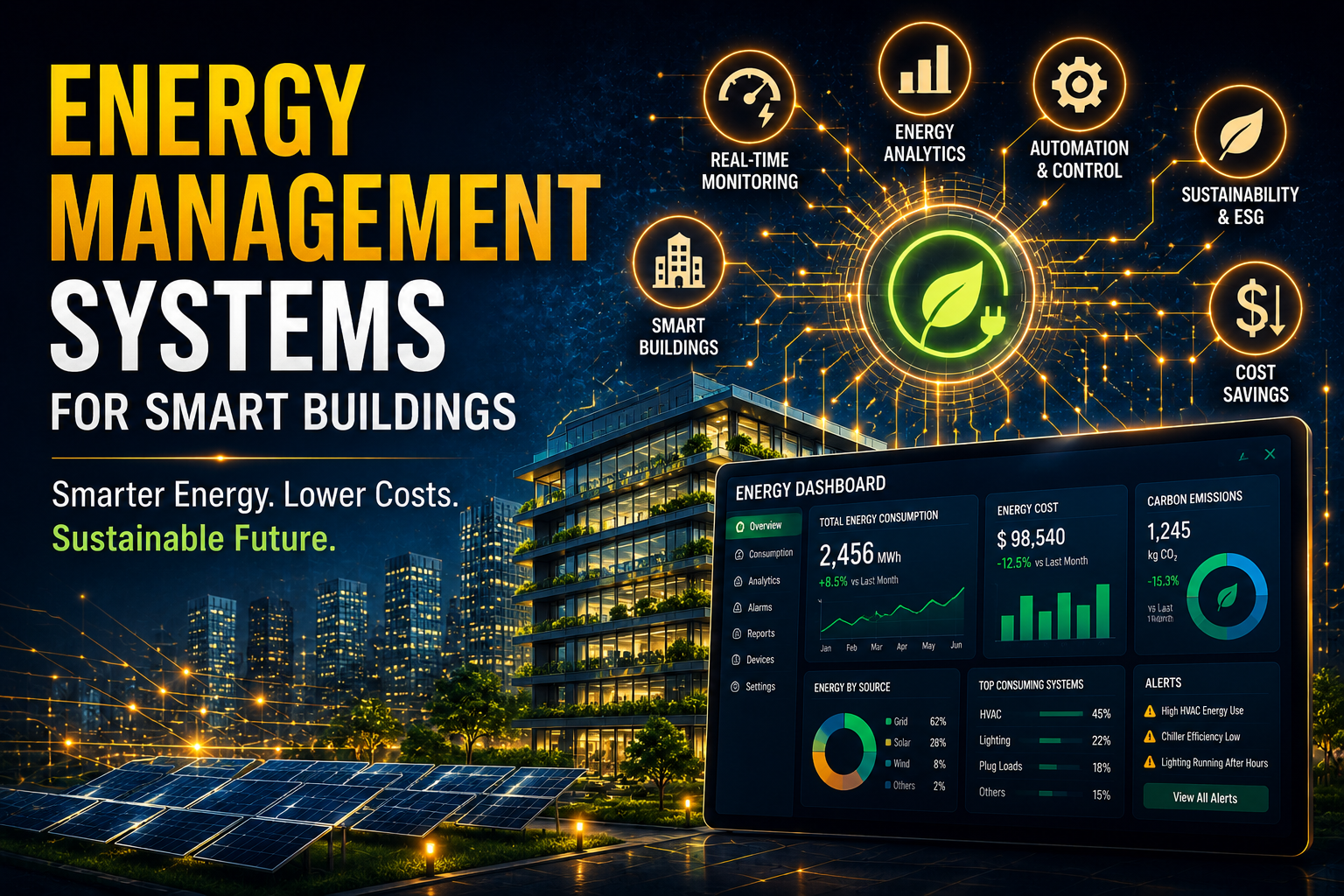
    Energy Management Systems for Smart Buildings: Driving Efficiency and Sustainability

    Energy has become one of the largest operational costs for modern facilities and buildings.

    Commercial towers, hospitals, airports, hotels, manufacturing plants, and large campuses consume enormous amounts of electricity, water, and utilities every day.

    At the same time, organizations are under increasing pressure to reduce operational costs, improve sustainability, and meet ESG and environmental compliance goals.

    Traditional energy monitoring methods are no longer enough.

    Monthly utility bills and manual reporting provide very limited visibility into how energy is consumed across facilities.

    This is why Energy Management Systems (EMS) have become essential for smart buildings.

    Modern EMS platforms help organizations monitor, analyze, optimize, and automate energy usage through real-time data and intelligent systems.

    What is an Energy Management System?

    An Energy Management System (EMS) is a digital platform used to monitor, control, and optimize energy consumption across buildings and facilities.

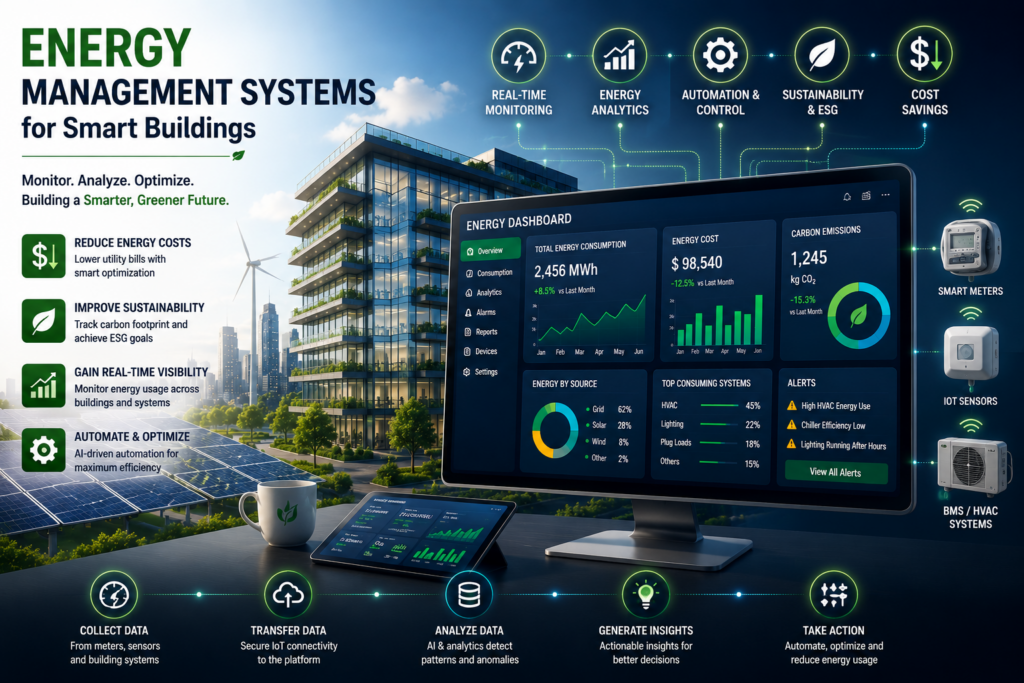
    EMS platforms collect data from multiple systems and devices, including:

    • Electricity meters
    • Water meters
    • HVAC systems
    • Lighting systems
    • IoT sensors
    • Renewable energy systems
    • Building Management Systems (BMS)

    The system analyzes this data and provides insights that help organizations reduce waste and improve efficiency.

    Why Smart Buildings Need Energy Management Systems

    Modern smart buildings generate large amounts of operational data.

    Without intelligent monitoring systems, organizations struggle to identify:

    • Energy waste
    • Equipment inefficiencies
    • Abnormal consumption patterns
    • Peak usage periods
    • HVAC overconsumption
    • Unnecessary lighting usage

    Many organizations believe they are digital because they use dashboards and software tools, while their operations remain fragmented and disconnected. True digital transformation requires connected systems where data flows seamlessly across operations.

    An EMS provides centralized visibility into energy operations and enables organizations to make data-driven decisions.

    Key Components of an EMS

    Real-Time Energy Monitoring

    EMS platforms continuously track energy usage across facilities.

    This allows organizations to identify spikes, inefficiencies, and abnormal consumption instantly.

    Smart Meter Integration

    Smart meters automatically send consumption data to the EMS platform.

    This eliminates manual meter readings and improves accuracy.

    HVAC and Lighting Optimization

    HVAC and lighting systems are often the largest energy consumers in buildings.

    EMS platforms help optimize:

    • Cooling schedules
    • Temperature settings
    • Occupancy-based lighting
    • Automatic shutdown systems

    This reduces unnecessary energy consumption.

    Analytics and Reporting

    EMS dashboards provide insights into:

    • Energy trends
    • Peak usage times
    • Cost analysis
    • Carbon footprint tracking
    • Sustainability performance

    These reports help management make informed operational decisions.

    Automated Alerts and Controls

    Modern EMS platforms can trigger alerts when energy consumption exceeds defined thresholds.

    For example:

    • HVAC operating after office hours
    • Excessive water usage
    • Sudden power spikes
    • Equipment consuming abnormal energy

    This allows facility teams to respond quickly.

    Role of IoT and AI in Energy Management

    The future of energy management is driven by AI and IoT technologies.

    IoT Sensors

    IoT devices collect real-time operational data from equipment and building systems.

    Sensors monitor:

    • Occupancy
    • Temperature
    • Humidity
    • Air quality
    • Equipment performance
    • Utility consumption

    Artificial Intelligence

    AI systems analyze energy usage patterns and recommend optimization strategies.

    AI can help:

    • Predict energy demand
    • Detect anomalies
    • Automate HVAC scheduling
    • Optimize power consumption
    • Improve sustainability performance

    This transforms energy management from reactive monitoring into intelligent optimization.

    Benefits of Energy Management Systems

    Organizations implementing EMS platforms achieve significant operational advantages.

    Reduced Energy Costs

    Continuous monitoring helps reduce unnecessary energy usage.

    Improved Sustainability

    Organizations can reduce carbon emissions and improve ESG performance.

    Better Operational Visibility

    Real-time dashboards provide complete visibility into energy consumption.

    Improved Equipment Performance

    Efficient energy usage reduces strain on equipment and systems.

    Regulatory Compliance

    EMS platforms help organizations comply with sustainability and energy regulations.

    SmartFM and Energy Management

    SmartFM includes integrated energy management capabilities designed for intelligent facilities.

    SmartFM helps organizations:

    • Monitor electricity and water usage
    • Analyze energy consumption trends
    • Integrate IoT devices and smart meters
    • Generate sustainability reports
    • Optimize HVAC and utilities
    • Improve operational efficiency

    By integrating EMS with CAFM, CMMS, IoT, and building operations, SmartFM creates a unified smart building ecosystem.

    For example:

    • IoT sensors detect high energy consumption
    • SmartFM analyzes the usage pattern
    • The system identifies inefficiencies
    • Facility teams receive automated alerts
    • Corrective action is initiated immediately

    This enables organizations to move toward intelligent and sustainable operations.

    Industries Using EMS Platforms

    Energy Management Systems are widely used across industries such as:

    • Commercial real estate
    • Hospitals and healthcare
    • Airports
    • Hotels and hospitality
    • Manufacturing facilities
    • Educational campuses
    • Government buildings
    • Smart cities

    These industries require both operational efficiency and sustainability performance.
    The Future of Smart Energy Management

    Energy management systems will continue evolving alongside smart buildings and AI technologies.

    Future EMS platforms will include:

    • AI-powered optimization
    • Predictive energy analytics
    • Automated sustainability reporting
    • Renewable energy integration
    • Smart grid connectivity
    • Carbon tracking dashboards

    Buildings of the future will not just consume energy.

    They will intelligently optimize and manage it.

    Energy management is becoming a strategic priority for modern organizations.

    As buildings become smarter and sustainability requirements increase, organizations need intelligent systems that provide real-time visibility, automation, and optimization.

    Energy Management Systems help organizations reduce costs, improve efficiency, and support long-term sustainability goals.

    Platforms like SmartFM enable this transformation by combining energy management with facility operations, IoT integration, and intelligent analytics into a single connected platform.

    Frequently Asked Questions

    What is an Energy Management System?

    An Energy Management System (EMS) is a digital platform that monitors and optimizes energy usage across facilities and buildings.

    How does AI help energy management?

    AI analyzes energy usage patterns, predicts demand, identifies inefficiencies, and automates optimization processes.

    Why are Energy Management Systems important?

    EMS platforms help reduce energy costs, improve sustainability, optimize building performance, and support ESG goals.

    Can SmartFM integrate with energy monitoring systems?

    Yes. SmartFM integrates with IoT sensors, smart meters, HVAC systems, and building management systems for centralized energy management.
  • The Future of Smart Buildings with AI and IIoT: From Infrastructure to Intelligence

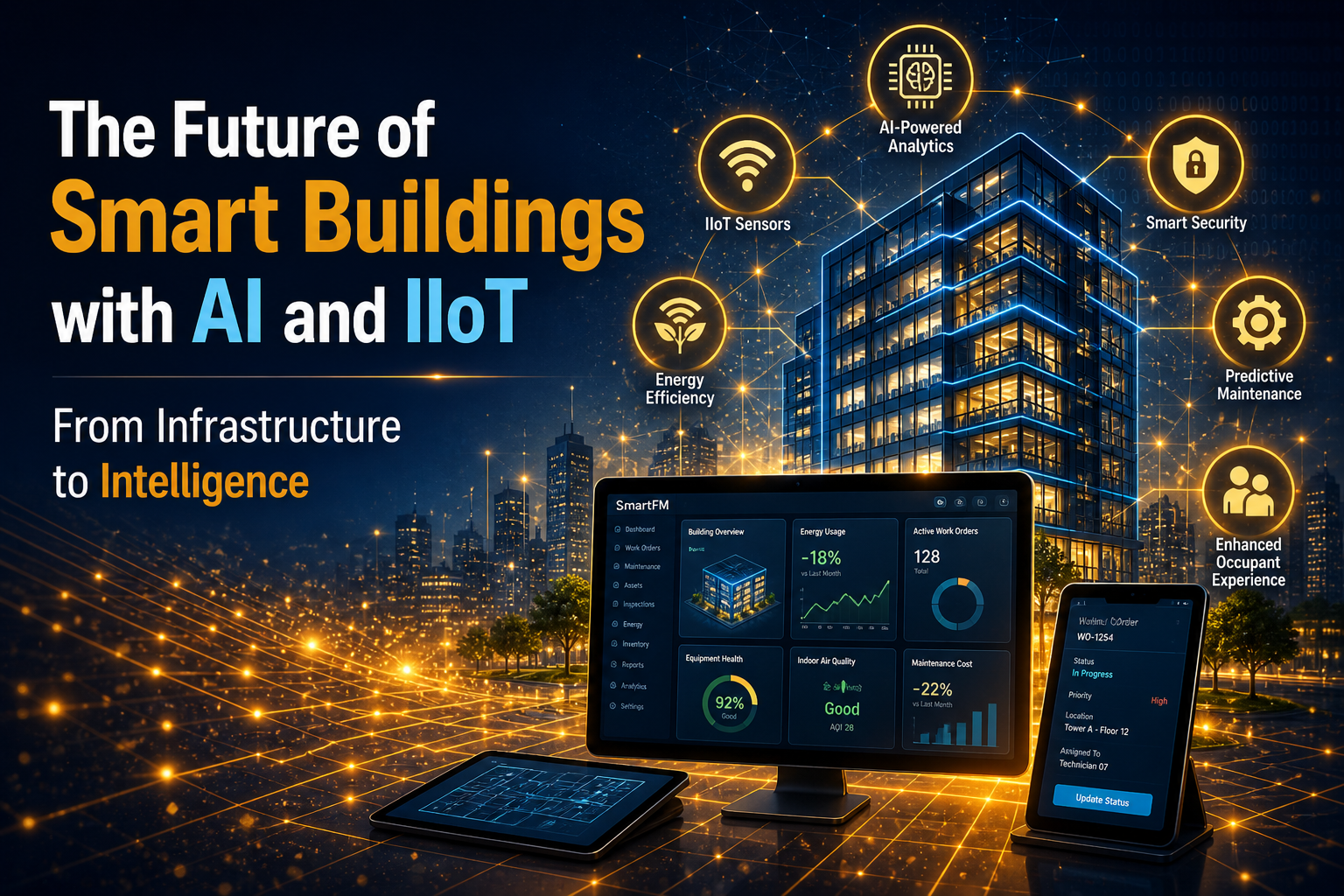
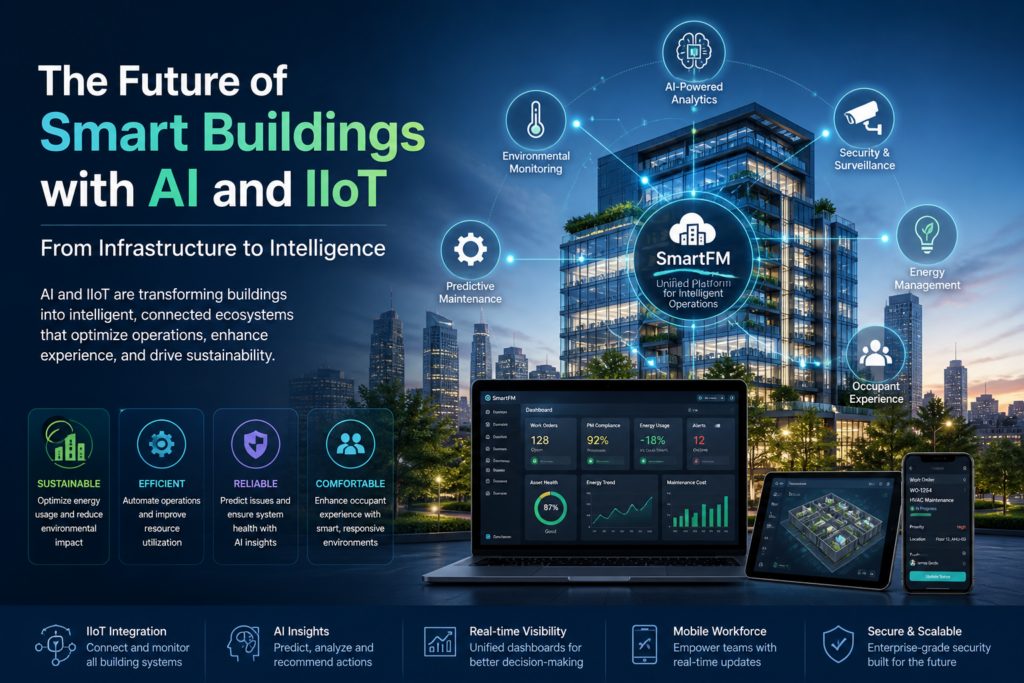
    The Future of Smart Buildings with AI and IIoT: From Infrastructure to Intelligence

    Buildings are no longer just physical structures.

    They are evolving into intelligent ecosystems that can sense, analyze, and respond to real-time conditions.

    From commercial towers and hospitals to airports and smart cities, modern infrastructure is becoming increasingly connected and data-driven.

    Artificial Intelligence (AI) and Industrial Internet of Things (IIoT) are at the core of this transformation.

    These technologies are redefining how buildings operate, shifting from manual and reactive systems to automated, predictive, and intelligent environments.

    What is a Smart Building?

    A smart building is a facility that uses digital technologies, sensors, and automation systems to monitor and manage operations in real time.

    These buildings integrate multiple systems such as:

    • Facility management platforms
    • Building Management Systems (BMS)
    • IoT sensors and devices
    • Energy management systems
    • Security and access control systems
    • Data analytics platforms

    The goal is to improve operational efficiency, reduce costs, enhance occupant comfort, and support sustainability.

    The Role of IIoT in Smart Buildings

    Industrial IoT plays a critical role in enabling smart infrastructure.

    IIoT sensors are deployed across buildings to collect real-time data from various systems.

    These sensors can monitor:

    • Temperature and humidity
    • Energy consumption
    • Equipment performance
    • Occupancy levels
    • Air quality
    • Water usage

    This continuous data flow provides complete visibility into building operations.

    Instead of relying on periodic inspections, facility teams can monitor everything in real time.

    The Role of Artificial Intelligence

    While IIoT collects data, AI transforms that data into actionable insights.

    AI systems analyze patterns, detect anomalies, and make predictions that help optimize building performance.

    AI enables:

    • Predictive maintenance
    • Energy optimization
    • Automated fault detection
    • Intelligent scheduling of operations
    • Real-time decision-making

    For example, AI can detect early signs of equipment failure and automatically trigger a maintenance request before a breakdown occurs.

    From Reactive to Predictive Operations

    Traditional facility management is reactive.

    Equipment is repaired after failure, inspections are scheduled manually, and decisions are based on past data.

    Smart buildings operate differently.

    They use real-time data and predictive analytics to anticipate issues before they occur.

    This shift results in:

    • Reduced downtime
    • Lower maintenance costs
    • Improved asset lifespan
    • Higher operational efficiency

    However, many organizations still believe they are digital because they use modern tools, while their core processes remain manual and disconnected. This gap between tools and actual transformation is often referred to as digital decoration.

    True smart buildings require connected systems and integrated intelligence.

    SmartFM and Intelligent Facility Management

    SmartFM plays a key role in enabling smart buildings by integrating AI, IIoT, and facility management into a single platform.

    SmartFM connects:

    • CAFM and CMMS systems
    • IoT sensors and devices
    • Energy management systems
    • Compliance and inspections
    • Mobile workforce applications

    This allows organizations to manage buildings through a centralized digital ecosystem.

    For example:

    • Sensors detect abnormal energy consumption
    • SmartFM analyzes the data
    • The system identifies inefficiencies
    • A work order is automatically generated
    • The technician receives the task via mobile app

    This creates a fully connected and automated operational workflow.

    Benefits of Smart Buildings with AI and IIoT

    Organizations adopting smart building technologies gain significant advantages.

    Improved Energy Efficiency

    Real-time monitoring helps reduce energy waste and optimize consumption.

    Predictive Maintenance

    AI detects potential failures before they happen, reducing downtime.

    Enhanced Occupant Experience

    Smart environments improve comfort, safety, and convenience.

    Better Operational Control

    Centralized dashboards provide full visibility across all systems.

    Sustainability and ESG Compliance

    Smart buildings support environmental goals through optimized resource usage.

    Use Cases Across Industries

    Smart building technology is being adopted across multiple industries.

    • Commercial real estate
    • Airports and transportation hubs
    • Hospitals and healthcare facilities
    • Hotels and hospitality
    • Universities and campuses
    • Manufacturing and industrial facilities
    • Government and smart city projects

    Each industry benefits from improved efficiency, automation, and real-time control.

    The Future of Smart Buildings

    The next phase of smart buildings will go beyond automation.

    Future developments will include:

    • Autonomous building systems
    • Digital twins for infrastructure
    • AI-driven decision-making
    • Fully integrated smart city ecosystems
    • Advanced sustainability and carbon tracking systems

    Buildings will not only respond to conditions but will continuously learn and optimize themselves.

    Smart buildings are redefining the future of infrastructure.

    AI and IIoT technologies are transforming buildings into intelligent systems that can monitor, analyze, and optimize operations in real time.

    Organizations that adopt these technologies will gain a competitive advantage through efficiency, cost savings, and improved sustainability.

    Platforms like SmartFM enable this transformation by connecting systems, automating workflows, and providing real-time insights.

    The future of buildings is not just smart.

    It is intelligent, connected, and continuously evolving.

    Frequently Asked Questions

    What is a smart building?

    A smart building uses digital technologies, sensors, and automation systems to monitor and manage operations in real time.

    What is IIoT in facility management?

    IIoT refers to connected sensors and devices that collect real-time data from building systems.

    How does AI help in smart buildings?

    AI analyzes data, predicts failures, optimizes energy usage, and automates building operations.

    What are the benefits of smart buildings?

    Smart buildings improve efficiency, reduce costs, enhance occupant experience, and support sustainability.

    How does SmartFM support smart buildings?

    SmartFM integrates AI, IoT, maintenance, compliance, and operations into a single platform for intelligent facility management.

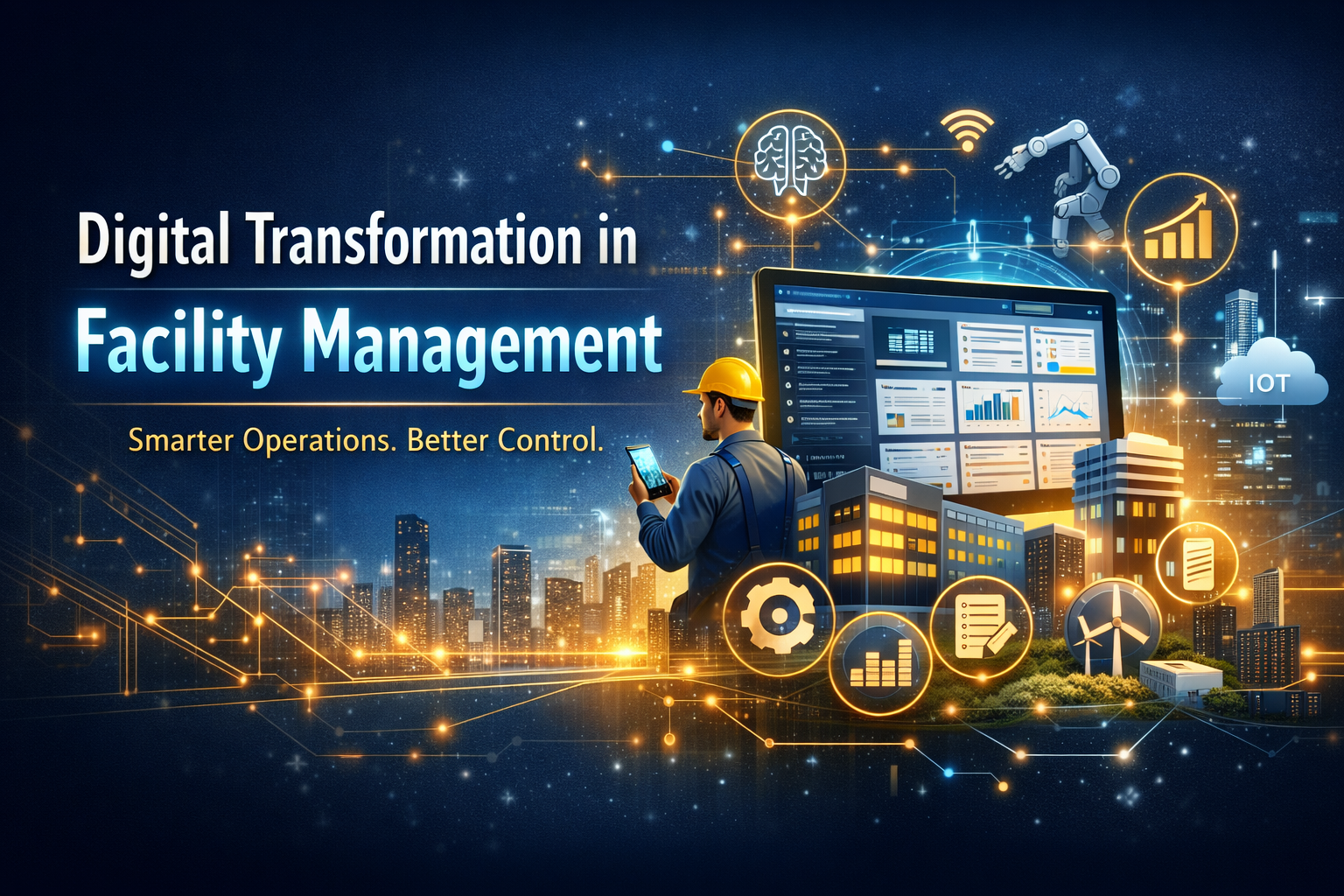
  • Digital Transformation in Facility Management: Building Smarter, More Efficient Operations

    Digital Transformation in Facility Management: Building Smarter, More Efficient Operations

    Facility management is no longer limited to maintaining buildings and responding to work orders. Modern facilities have become increasingly complex environments that require real-time visibility, faster response times, better compliance, and greater operational efficiency.

    Traditional methods based on spreadsheets, paper forms, phone calls, and disconnected software are no longer enough.

    This is why digital transformation in facility management has become essential.

    By adopting digital platforms, automation, artificial intelligence, and IoT technologies, organizations can improve the way they manage assets, maintenance, workforce, energy, compliance, and day-to-day operations.

    What is Digital Transformation in Facility Management?

    Digital transformation in facility management refers to the use of technology to improve and automate facility operations.

    Instead of relying on manual processes, organizations use digital systems to manage maintenance, assets, work orders, inspections, compliance, energy usage, and workforce coordination from a single platform.

    Digital transformation typically includes:

    • Cloud-based facility management platforms
    • Mobile applications for technicians
    • Automated work order systems
    • Real-time dashboards and reporting
    • AI and predictive analytics
    • IoT and sensor integration
    • Digital inspections and compliance tracking

    The goal is to create smarter, faster, and more efficient facility operations.

    Why Traditional Facility Management is No Longer Enough

    Many organizations still manage facilities using outdated methods.

    Common challenges include:

    • Delayed maintenance requests
    • Lack of visibility into asset condition
    • Paper-based inspections and reports
    • Missed preventive maintenance schedules
    • Difficulty tracking technician performance
    • Compliance risks and incomplete audit trails
    • Higher operational and maintenance costs

    These problems increase as facilities become larger and more complex.

    Without digital systems, facility teams often spend more time reacting to problems instead of preventing them.

    Key Technologies Driving Digital Transformation

    • Facility Management Software – Modern facility management software centralizes all operations into one platform.
      Solutions like SmartFM help organizations manage:
      • Assets
      • Work orders
      • Preventive maintenance
      • Inventory
      • Housekeeping
      • Compliance
      • Vendor management

    This gives facility managers a complete view of operations in real time.

    • Mobile Applications for Field Teams – Mobile apps are transforming how technicians and supervisors work.
      With mobile facility management applications, teams can:
      • Receive work orders instantly
      • Update task status in real time
      • Capture photos and signatures
      • Access asset history
      • Record inspection results on site

    This improves response time, reduces paperwork, and increases workforce productivity.

    • Artificial Intelligence and Predictive Maintenance – Artificial intelligence is helping facility teams move from reactive maintenance to predictive maintenance.
      AI systems analyze data from assets and identify patterns that indicate future failures. This allows organizations to:
      • Detect issues before equipment fails
      • Reduce unplanned downtime
      • Improve asset life
      • Lower maintenance costs

    For example, an HVAC unit showing unusual vibration or temperature readings can automatically trigger a maintenance request before it breaks down.

    • IoT and Smart Sensors – IoT sensors play a major role in modern facility management. Sensors can monitor:
      • Temperature
      • Energy usage
      • Occupancy
      • Water leakage
      • Equipment condition
      • Indoor air quality

    These sensors send real-time data to facility platforms, allowing organizations to monitor operations continuously and respond faster.

    Benefits of Digital Transformation in Facility Management

    Organizations that implement digital facility management solutions gain several advantages.

    • Improved Operational Efficiency – Automated workflows reduce manual work and help teams complete tasks faster.
    • Better Asset Performance – Digital systems help track asset history, maintenance schedules, and performance.
    • Lower Costs – Preventive and predictive maintenance reduce repair costs and unplanned downtime.
    • Stronger Compliance – Digital records, inspections, and audit trails make it easier to meet regulatory and safety requirements.
    • Real-Time Visibility – Managers can view dashboards and reports showing the current status of assets, maintenance, technicians, and operations.

    How SmartFM Supports Digital Transformation

    SmartFM is a complete facility management platform designed to support digital transformation across modern organizations.

    SmartFM combines multiple modules into a single system, including:

    • CAFM
    • CMMS
    • IWMS
    • Inventory Management
    • Energy Management
    • Housekeeping
    • Compliance and Inspections
    • Mobile Applications
    • IoT Integration

    With SmartFM, organizations can digitize every part of their facility operations and gain complete control through a centralized platform.

    Key SmartFM capabilities include:

    • Automated preventive maintenance
    • Mobile technician apps
    • Real-time dashboards
    • Asset lifecycle management
    • Digital inspections and audits
    • AI and IoT integration

    Industries Benefiting from Digital Facility Management

    Digital transformation in facility management is valuable across many industries.

    Examples include:

    • Commercial buildings
    • Hospitals and healthcare facilities
    • Airports
    • Hotels
    • Manufacturing plants
    • Universities and schools
    • Government facilities
    • Retail malls and shopping centers

    Each of these environments requires efficient operations, compliance, and real-time management.

    The Future of Facility Management

    The future of facility management will be driven by intelligent systems.

    Over the coming years, organizations will increasingly adopt:

    • AI-powered predictive maintenance
    • Smart building automation
    • Digital twins
    • Autonomous inspections
    • Energy optimization systems
    • Integrated workplace management systems

    Facility management will continue to move from manual and reactive operations toward connected, data-driven, and intelligent environments.

    Digital transformation is reshaping the way facilities are managed.

    Organizations that continue to rely on manual processes risk higher costs, inefficiencies, and limited operational visibility.

    By adopting modern technologies such as facility management software, AI, IoT, and mobile applications, organizations can improve efficiency, reduce costs, and build smarter facilities.

    SmartFM provides the digital foundation needed to support this transformation and help organizations create intelligent, future-ready operations.

    Frequently Asked Questions

    What is The Stories Book about?

    This exquisite compilation showcases a diverse array of photographs that capture the essence of different eras and cultures, reflecting the unique styles and perspectives of each artist.

    How much does The Stories Book cost?

    This exquisite compilation showcases a diverse array of photographs that capture the essence of different eras and cultures, reflecting the unique styles and perspectives of each artist.

    When will The Stories Book be released?

    This exquisite compilation showcases a diverse array of photographs that capture the essence of different eras and cultures, reflecting the unique styles and perspectives of each artist.

    Are signed copies available?

    This exquisite compilation showcases a diverse array of photographs that capture the essence of different eras and cultures, reflecting the unique styles and perspectives of each artist.

    Frequently Asked Questions

    What is digital transformation in facility management?

    Digital transformation in facility management means using technology such as software, AI, IoT, and automation to improve facility operations.

    Why is digital transformation important for facility management?

    It improves operational efficiency, reduces costs, strengthens compliance, and provides better visibility into assets and maintenance activities.

    What technologies are used in digital facility management?

    Common technologies include facility management software, mobile applications, AI, IoT sensors, predictive maintenance, and cloud platforms.

    How does SmartFM support digital transformation?

    SmartFM provides a centralized platform with CAFM, CMMS, mobile apps, compliance tracking, inventory management, and IoT integration.

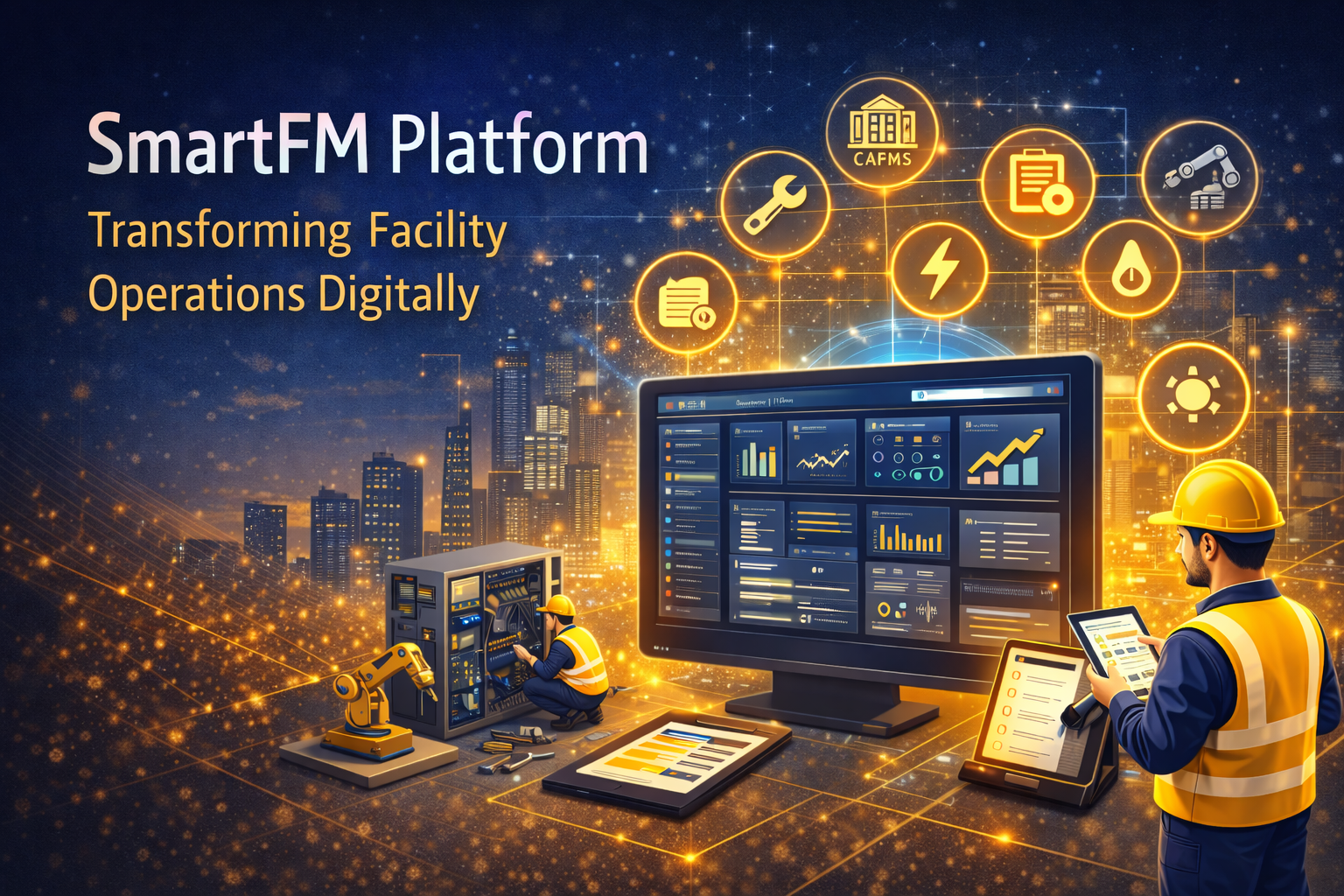
  • SmartFM Platform: Transforming Facility Operations Digitally

    SmartFM Platform: Transforming Facility Operations Digitally

    Facility operations today are more complex than ever.

    Organizations must manage maintenance, assets, technicians, inspections, compliance, inventory, energy consumption, housekeeping, and service requests across multiple sites and buildings.

    Many organizations believe they are already digital because they use email, spreadsheets, ERP systems, and mobile applications. However, when operations are still managed through disconnected systems, manual approvals, and siloed data, they are not truly digital. This is often digital decoration rather than digital transformation.

    This is where SmartFM makes the difference.

    SmartFM is a complete digital platform designed to help organizations manage all facility operations from a single, integrated system.

    What is SmartFM?

    SmartFM is an enterprise facility management platform that combines multiple operational systems into one connected solution.

    Instead of using separate software for maintenance, inspections, inventory, compliance, and workforce management, SmartFM brings everything together through a single platform.

    SmartFM supports:

    • CAFM
    • CMMS
    • IWMS
    • Inventory Management
    • Energy Management
    • Housekeeping Management
    • Compliance and Audits
    • Mobile Applications
    • IoT and Smart Building Integration

    The result is a connected environment where information flows seamlessly across departments and operations.

    Why Organizations Need an Integrated Platform

    Many organizations still operate with disconnected systems.

    For example:

    • Maintenance is managed in one software
    • Inventory is tracked in spreadsheets
    • Inspections are recorded on paper
    • Service requests are handled through email
    • Compliance documents are stored separately

    This creates serious operational problems:

    • Delayed response times
    • Duplicate work
    • Lack of visibility
    • Missed maintenance schedules
    • Higher operational costs
    • Difficulty proving compliance

    An integrated platform solves these issues by centralizing all operations.

    Core Modules of SmartFM

    CAFM and Facility Management

    SmartFM includes a powerful CAFM module that helps organizations manage:

    • Assets and equipment
    • Space and building information
    • Service requests
    • Facility operations
    • Asset lifecycle tracking

    This provides a complete view of the facility environment.

    CMMS and Maintenance Management

    SmartFM includes advanced CMMS capabilities to support:

    • Preventive maintenance
    • Corrective maintenance
    • Predictive maintenance
    • Work order management
    • Technician scheduling

    Maintenance teams can create, assign, and track work orders in real time.

    Compliance and Inspections

    Regulatory requirements are becoming more important across all industries.

    SmartFM helps organizations manage:

    • Safety inspections
    • Audit checklists
    • Compliance reporting
    • Digital certificates
    • Document history

    Every inspection and maintenance activity is stored digitally, making it easier to meet audit and regulatory requirements.

    Inventory and Spare Parts Management

    SmartFM helps facility teams manage spare parts, materials, and inventory from one system.

    Organizations can:

    • Track stock levels
    • Monitor spare parts usage
    • Prevent shortages
    • Improve procurement planning

    This reduces delays caused by unavailable materials.

    Energy Management and Sustainability

    Energy is one of the largest operational costs in modern facilities.

    SmartFM includes energy management capabilities that allow organizations to:

    • Monitor electricity and water consumption
    • Identify waste and inefficiencies
    • Track sustainability performance
    • Improve energy efficiency

    These insights help organizations reduce costs and support sustainability goals.

    Mobile Applications for Field Teams

    SmartFM includes mobile apps for technicians, supervisors, inspectors, and facility teams.

    Using the mobile application, teams can:

    • Receive work orders instantly
    • Update task status on site
    • Upload photos and reports
    • Capture signatures
    • Record inspections in real time

    This improves response times and eliminates paper-based processes.

    SmartFM and Digital Transformation

    Digital transformation is not simply about adding more software.

    It is about changing how the organization operates.

    A truly digital organization has:

    • Connected processes
    • Real-time visibility
    • Automated workflows
    • Integrated systems
    • Faster decision-making

    SmartFM supports this transformation by connecting every part of facility operations into one intelligent platform.

    Instead of working in silos, maintenance, compliance, inventory, energy, and workforce teams can collaborate through a shared system.

    SmartFM and Smart Buildings

    Modern buildings are increasingly connected through sensors, IoT devices, and automation systems.

    SmartFM integrates with:

    • IoT sensors
    • Smart meters
    • Building Management Systems (BMS)
    • Access control systems
    • HVAC and utility systems

    This allows organizations to monitor buildings in real time and respond automatically to issues.

    For example:

    • A sensor detects abnormal temperature in equipment
    • SmartFM automatically generates a maintenance work order
    • The technician receives the task on a mobile device
    • The issue is resolved before a failure occurs

    This is how smart buildings become truly intelligent.

    Industries Using SmartFM

    SmartFM is designed for a wide range of industries, including:

    • Commercial buildings
    • Hospitals and healthcare
    • Hotels and hospitality
    • Airports
    • Universities and schools
    • Manufacturing facilities
    • Government buildings
    • Retail malls

    Each industry can customize SmartFM based on its specific operational needs.

    Benefits of SmartFM Platform

    Organizations implementing SmartFM typically achieve:

    • Reduced maintenance costs
    • Improved asset performance
    • Faster response times
    • Better compliance management
    • Lower operational risk
    • Increased workforce productivity
    • Better visibility into operations

    By replacing disconnected systems with a single platform, organizations gain better control and better results.

    Facility operations are becoming more complex, and traditional methods are no longer enough.

    Organizations need a platform that connects maintenance, compliance, assets, energy, inspections, and workforce management into one system.

    SmartFM provides that platform.

    By digitizing and integrating facility operations, SmartFM helps organizations improve efficiency, reduce costs, strengthen compliance, and prepare for the future of smart buildings.

    Frequently Asked Questions

    What is SmartFM?

    SmartFM is a digital facility management platform that combines CAFM, CMMS, compliance, inventory, energy management, mobile apps, and IoT integration into one system.

    What industries can use SmartFM?

    SmartFM can be used in commercial buildings, healthcare, hospitality, airports, universities, manufacturing, retail, and government facilities.

    How does SmartFM support digital transformation?

    SmartFM connects all facility operations through one platform, replacing disconnected systems and manual processes.

    Does SmartFM support mobile applications?

    Yes. SmartFM includes mobile applications that allow technicians and supervisors to manage work orders, inspections, and maintenance tasks in real time.

    Can SmartFM integrate with IoT and smart building systems?

    Yes. SmartFM can integrate with IoT sensors, smart meters, BMS systems, HVAC systems, and other building technologies.