Tag: digital compliance

  • Digital Compliance Management for Modern Facilities: From Manual Audits to Intelligent Operations

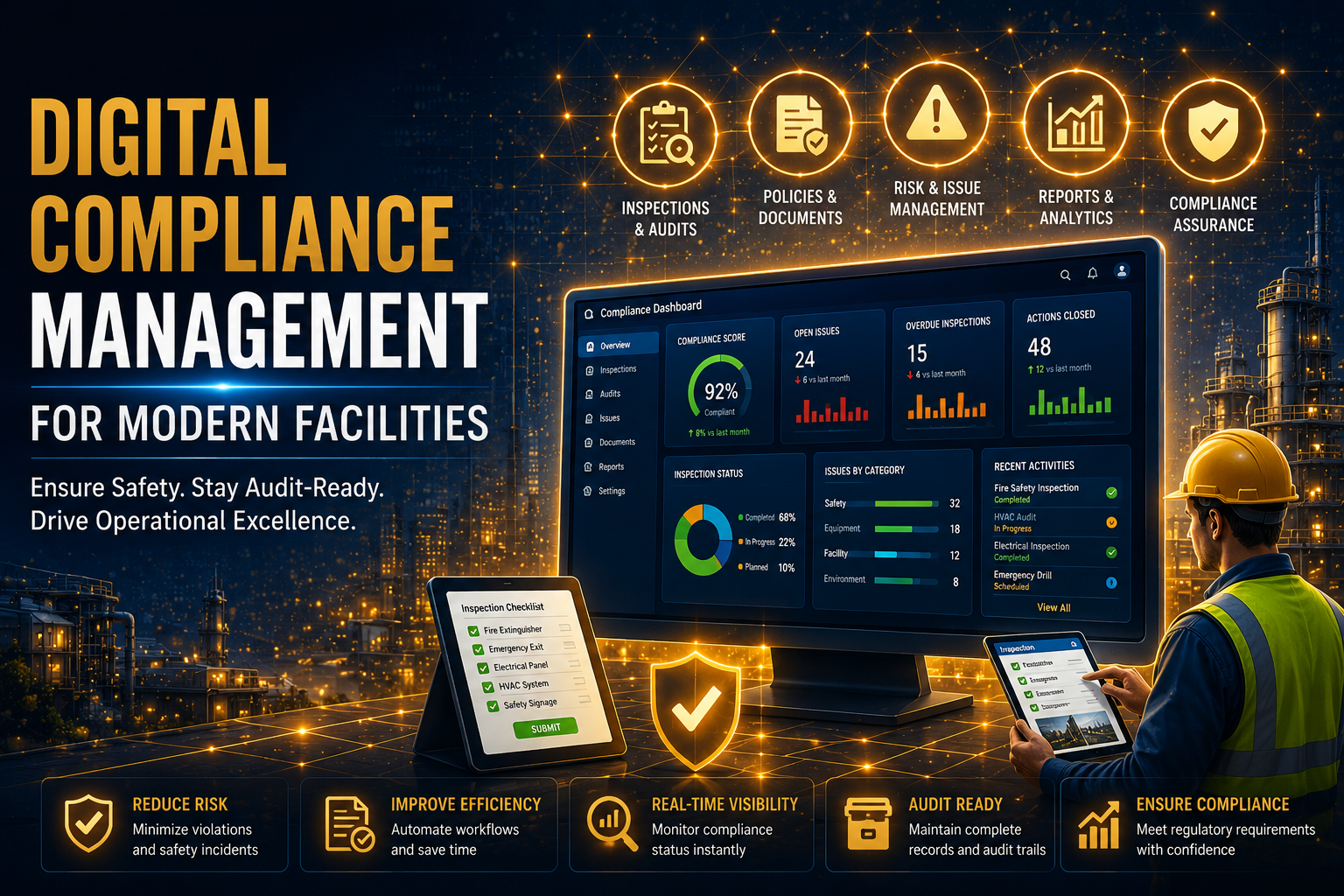
    Digital Compliance Management for Modern Facilities: From Manual Audits to Intelligent Operations

    Compliance has become one of the most critical responsibilities in modern facility management.

    Organizations today must comply with multiple regulations related to:

    • Health and safety
    • Building maintenance
    • Fire and life safety systems
    • Environmental standards
    • Operational procedures
    • Asset inspections
    • Sustainability and ESG reporting

    However, many facilities still rely on paper forms, spreadsheets, emails, and disconnected systems to manage compliance activities.

    This creates operational risks, delays, missing records, and audit challenges.

    As facilities become more complex and regulations become stricter, traditional compliance methods are no longer enough.

    This is where digital compliance management becomes essential.

    What is Digital Compliance Management?

    Digital compliance management refers to the use of technology platforms to manage inspections, audits, safety procedures, maintenance compliance, documentation, and reporting through centralized digital systems.

    Instead of relying on manual records and disconnected workflows, organizations can manage compliance in real time.

    A digital compliance platform helps organizations:

    • Schedule inspections and audits
    • Track safety procedures
    • Maintain digital records
    • Automate alerts and reminders
    • Generate compliance reports
    • Maintain audit trails
    • Monitor regulatory requirements

    This improves operational control and reduces compliance risks.

    Why Traditional Compliance Processes Fail

    Many organizations still manage compliance manually.

    Common processes include:

    • Paper inspection forms
    • Spreadsheet tracking
    • Email approvals
    • Physical filing systems
    • Separate systems for maintenance and compliance

    These methods often lead to:

    • Missed inspections
    • Incomplete records
    • Delayed corrective actions
    • Lack of visibility into compliance status
    • Difficulty during audits
    • Higher operational risk

    Organizations may believe they are digital because they use modern software tools. However, when compliance workflows remain disconnected and manual, the organization is not truly digital. This is often digital decoration rather than digital transformation.

    Key Components of Digital Compliance Systems

    Inspection Management

    Digital platforms help schedule and manage routine inspections.

    This includes:

    • Safety inspections
    • Equipment inspections
    • Facility walkthroughs
    • Environmental checks
    • Preventive maintenance audits

    Inspectors can complete checklists digitally using mobile applications.

    Audit Management

    Compliance platforms maintain detailed audit trails and historical records.

    Organizations can track:

    • Audit findings
    • Non-compliance issues
    • Corrective actions
    • Approval workflows
    • Compliance status

    This simplifies regulatory reviews and external audits.

    Automated Alerts and Notifications

    Digital systems automatically notify teams about:

    • Upcoming inspections
    • Expiring certifications
    • Missed maintenance activities
    • Compliance violations
    • Pending corrective actions

    This reduces the risk of missed deadlines.

    Document and Certificate Management

    Compliance systems centralize important documents such as:

    • Safety certificates
    • Regulatory approvals
    • Inspection reports
    • Equipment documentation
    • Training records

    This ensures information is accessible and secure.

    Mobile Compliance Applications

    Mobile apps allow inspectors and technicians to:

    • Complete inspections on site
    • Upload photos and evidence
    • Capture signatures
    • Record issues instantly
    • Generate digital reports

    This improves efficiency and eliminates paperwork.

    Importance of Compliance in Modern Facilities

    Compliance is no longer just about avoiding penalties.

    It directly impacts:

    • Operational continuity
    • Employee safety
    • Asset reliability
    • Business reputation
    • Sustainability goals
    • Insurance and liability risks

    Organizations that fail to manage compliance effectively may face:

    • Operational shutdowns
    • Financial penalties
    • Legal liabilities
    • Increased safety incidents
    • Loss of certifications

    Digital systems help organizations reduce these risks through proactive management.
    Role of AI and IoT in Compliance Management

    Modern compliance systems increasingly integrate with AI and IoT technologies.

    IoT Sensors

    IoT devices monitor:

    • Fire systems
    • HVAC performance
    • Temperature and humidity
    • Equipment conditions
    • Occupancy levels
    • Water leakage

    These sensors provide real-time operational visibility.

    Artificial Intelligence

    AI helps organizations:

    • Predict compliance risks
    • Detect anomalies
    • Identify recurring issues
    • Automate reporting
    • Analyze inspection trends

    AI-driven compliance systems improve decision-making and operational intelligence.

    How SmartFM Supports Digital Compliance

    SmartFM provides integrated compliance management capabilities designed for modern facility environments.

    SmartFM helps organizations manage:

    • Inspections and audits
    • Safety checklists
    • Preventive maintenance compliance
    • Regulatory reporting
    • Digital documentation
    • Mobile inspections
    • Real-time dashboards and alerts

    By integrating compliance with CAFM, CMMS, IoT, and facility operations, SmartFM creates a centralized operational ecosystem.

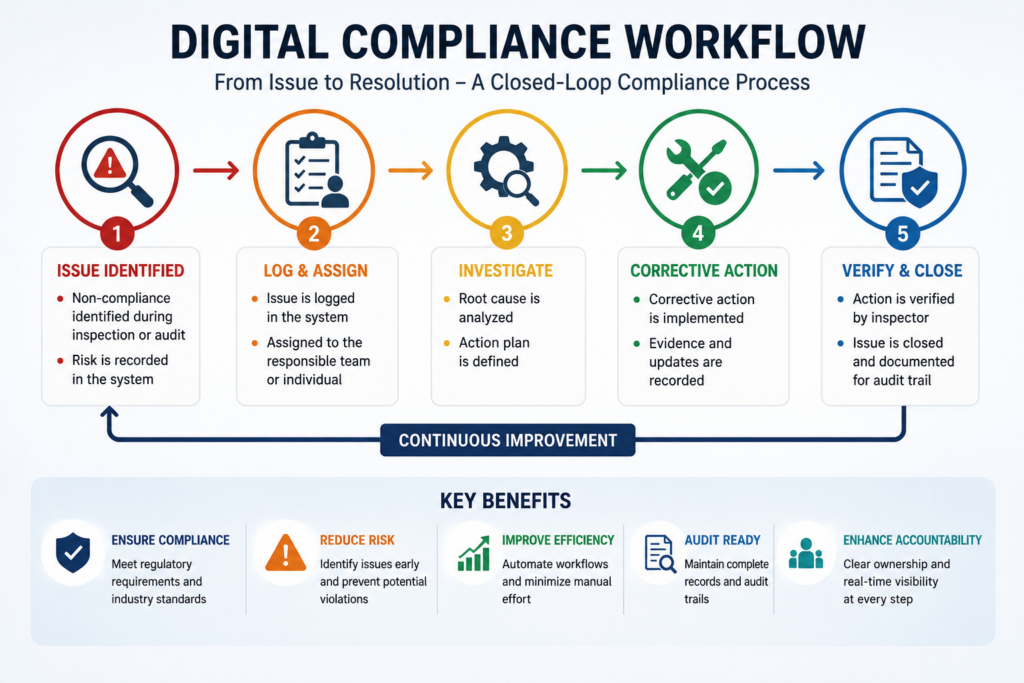
    For example:

    • An inspection identifies an HVAC issue
    • SmartFM automatically creates a work order
    • The technician receives the task through the mobile app
    • Corrective action is completed and documented digitally
    • The audit trail is updated automatically

    This creates a complete, connected compliance workflow.

    Industries Benefiting from Digital Compliance Management

    Digital compliance systems are essential across industries such as:

    • Healthcare and hospitals
    • Airports and transportation
    • Commercial real estate
    • Hospitality and hotels
    • Manufacturing and industrial facilities
    • Government and public sector
    • Educational institutions

    These environments require strict operational and safety compliance.

    The Future of Compliance Management

    The future of compliance management will become increasingly intelligent and automated.

    Future systems will include:

    • AI-driven risk prediction
    • Automated inspections
    • Real-time compliance scoring
    • Smart regulatory dashboards
    • Digital twins for compliance monitoring
    • Predictive maintenance integration

    Compliance management will move from reactive auditing toward continuous operational intelligence.

    Modern facility compliance requires more than manual inspections and paper records.

    Organizations need intelligent systems that provide visibility, automation, auditability, and real-time control.

    Digital compliance management helps organizations improve operational safety, reduce risks, strengthen reporting, and simplify audits.

    Platforms like SmartFM enable organizations to transform compliance from a reactive process into a proactive and intelligent operational strategy.

    Frequently Asked Questions

    What is digital compliance management?

    Digital compliance management uses software platforms to manage inspections, audits, safety procedures, records, and compliance workflows digitally.

    How does SmartFM support compliance management?

    SmartFM provides inspection management, audit tracking, mobile apps, alerts, reporting, and digital audit trails in a centralized platform.

    Why is digital compliance important?

    It improves operational visibility, reduces risks, simplifies audits, and helps organizations maintain regulatory compliance.

    What industries need compliance management systems?

    Industries such as healthcare, airports, commercial buildings, manufacturing, hospitality, and government facilities require compliance management systems.

  • Dubai’s New Building Quality & Safety Law: Why Digital Compliance is No Longer Optional

    Dubai’s New Building Quality & Safety Law: Why Digital Compliance is No Longer Optional

    Dubai is raising the standard for building quality, safety, and operational accountability.

    Under Dubai Law No. 3 of 2026, all buildings in Dubai must obtain a Quality & Safety Certificate within one year. The law also introduces mandatory periodic maintenance obligations and requires building owners and management companies to maintain a digital Building Management System. Organizations that fail to comply may face fines of up to AED 2 million for repeated violations.

    For building owners, facility managers, developers, and property management companies, this is more than a regulatory update. It marks a shift toward continuous, technology-driven compliance.

    What Does Dubai Law No. 3 of 2026 Require?

    The new law expands compliance beyond construction and design. It requires building owners to actively maintain quality and safety throughout the entire lifecycle of the building.

    The key requirements include:

    • Obtaining a Quality & Safety Certificate within one year
    • Performing periodic inspections and preventive maintenance
    • Maintaining accurate digital records of assets, inspections, and repairs
    • Using a digital Building Management System
    • Demonstrating compliance through documented reporting and audit trails

    The law changes compliance from a one-time event into an ongoing operational responsibility.

    Why Traditional Facility Management Will Not Be Enough

    Many organizations still rely on spreadsheets, paper forms, email approvals, and disconnected systems.

    While these methods may work for small operations, they create serious risks when managing compliance at scale.

    Common problems include:

    • Missed preventive maintenance schedules
    • Incomplete inspection records
    • Difficulty proving compliance during audits
    • Lack of real-time visibility into asset condition
    • Manual coordination between teams and vendors

    Organizations may believe they are digital because they use email, cloud storage, or ERP software. However, if their processes are still manual and disconnected, they are not truly digital. As highlighted in Nanosoft’s own perspective, this is often “digital decoration” rather than digital transformation.

    The Rise of Digital Compliance Platforms

    To comply with the new Dubai law, organizations need integrated digital systems that connect maintenance, inspections, safety, assets, and reporting.

    Modern compliance platforms combine:

    • CAFM and CMMS systems
    • Mobile inspection applications
    • Preventive maintenance scheduling
    • Digital asset registers
    • Real-time dashboards
    • Automated alerts and reminders
    • Compliance reports and audit trails

    These platforms make it possible to track every inspection, maintenance activity, and safety issue from a single system.

    Why AI and Smart Facility Platforms Matter

    AI-driven facility management platforms are becoming essential because they help organizations move from reactive compliance to proactive compliance.

    Digital systems can automatically:

    • Detect missed maintenance schedules
    • Predict equipment failures
    • Trigger compliance alerts
    • Generate inspection reports
    • Track recurring issues across buildings

    Recent industry solutions launched in response to the new law include integrated CAFM, safety, energy, visitor management, housekeeping, and IoT systems designed to help organizations comply with the new requirements.

    How SmartFM Supports Compliance with the New Dubai Law

    SmartFM is designed to help building owners and facility teams meet new regulatory obligations through a centralized digital platform.

    SmartFM supports:

    • Preventive and corrective maintenance
    • Asset lifecycle management
    • Digital inspections and audits
    • Compliance checklists and reporting
    • Mobile applications for technicians and inspectors
    • Real-time dashboards and alerts
    • Document management and audit history

    By combining CAFM, CMMS, compliance management, inventory, mobile apps, and IoT integration, SmartFM provides a complete digital foundation for regulatory compliance.

    Organizations can use SmartFM to demonstrate:

    • When maintenance was completed
    • Which inspections were carried out
    • Who performed the work
    • What issues were identified and resolved

    This creates a complete digital audit trail that can support certification and regulatory reviews.

    The Bigger Shift: From Reactive to Continuous Compliance

    The most important impact of Dubai Law No. 3 of 2026 is that compliance is no longer reactive.

    In the past, many organizations only addressed maintenance and safety issues when problems occurred or when inspections were scheduled.

    The new model requires:

    • Continuous monitoring
    • Ongoing preventive maintenance
    • Real-time reporting
    • Data-driven decision-making

    This shift aligns with the future of smart buildings, where compliance, operations, maintenance, and sustainability are all managed through connected digital platforms.

    Dubai’s new building quality and safety law represents a major change for the facility management industry.

    Organizations that continue to rely on manual processes will struggle to meet the new requirements and may face significant financial and operational risks.

    To remain compliant, building owners and facility managers need more than traditional tools. They need integrated digital platforms that provide visibility, automation, reporting, and accountability.

    The future of compliance is digital, and organizations that adopt platforms like SmartFM today will be better prepared for tomorrow.

    Frequently Asked Questions

    What is Dubai Law No. 3 of 2026?

    Dubai Law No. 3 of 2026 is a new regulation that requires buildings in Dubai to maintain quality and safety standards through periodic maintenance, inspections, and digital management systems.

    What is a Quality & Safety Certificate?

    A Quality & Safety Certificate is an official certification required under the new law to confirm that a building meets the required operational and safety standards.

    Why do building owners need digital systems?

    Digital systems help building owners track inspections, maintenance, safety issues, and compliance records more efficiently and accurately.

    How can SmartFM help with compliance?

    SmartFM provides CAFM, CMMS, inspections, maintenance scheduling, digital reporting, and audit trails that help organizations meet the new compliance requirements.