Tag: CAFM

  • Dubai’s New Building Quality & Safety Law: Why Digital Compliance is No Longer Optional

    Dubai’s New Building Quality & Safety Law: Why Digital Compliance is No Longer Optional

    Dubai is raising the standard for building quality, safety, and operational accountability.

    Under Dubai Law No. 3 of 2026, all buildings in Dubai must obtain a Quality & Safety Certificate within one year. The law also introduces mandatory periodic maintenance obligations and requires building owners and management companies to maintain a digital Building Management System. Organizations that fail to comply may face fines of up to AED 2 million for repeated violations.

    For building owners, facility managers, developers, and property management companies, this is more than a regulatory update. It marks a shift toward continuous, technology-driven compliance.

    What Does Dubai Law No. 3 of 2026 Require?

    The new law expands compliance beyond construction and design. It requires building owners to actively maintain quality and safety throughout the entire lifecycle of the building.

    The key requirements include:

    • Obtaining a Quality & Safety Certificate within one year
    • Performing periodic inspections and preventive maintenance
    • Maintaining accurate digital records of assets, inspections, and repairs
    • Using a digital Building Management System
    • Demonstrating compliance through documented reporting and audit trails

    The law changes compliance from a one-time event into an ongoing operational responsibility.

    Why Traditional Facility Management Will Not Be Enough

    Many organizations still rely on spreadsheets, paper forms, email approvals, and disconnected systems.

    While these methods may work for small operations, they create serious risks when managing compliance at scale.

    Common problems include:

    • Missed preventive maintenance schedules
    • Incomplete inspection records
    • Difficulty proving compliance during audits
    • Lack of real-time visibility into asset condition
    • Manual coordination between teams and vendors

    Organizations may believe they are digital because they use email, cloud storage, or ERP software. However, if their processes are still manual and disconnected, they are not truly digital. As highlighted in Nanosoft’s own perspective, this is often “digital decoration” rather than digital transformation.

    The Rise of Digital Compliance Platforms

    To comply with the new Dubai law, organizations need integrated digital systems that connect maintenance, inspections, safety, assets, and reporting.

    Modern compliance platforms combine:

    • CAFM and CMMS systems
    • Mobile inspection applications
    • Preventive maintenance scheduling
    • Digital asset registers
    • Real-time dashboards
    • Automated alerts and reminders
    • Compliance reports and audit trails

    These platforms make it possible to track every inspection, maintenance activity, and safety issue from a single system.

    Why AI and Smart Facility Platforms Matter

    AI-driven facility management platforms are becoming essential because they help organizations move from reactive compliance to proactive compliance.

    Digital systems can automatically:

    • Detect missed maintenance schedules
    • Predict equipment failures
    • Trigger compliance alerts
    • Generate inspection reports
    • Track recurring issues across buildings

    Recent industry solutions launched in response to the new law include integrated CAFM, safety, energy, visitor management, housekeeping, and IoT systems designed to help organizations comply with the new requirements.

    How SmartFM Supports Compliance with the New Dubai Law

    SmartFM is designed to help building owners and facility teams meet new regulatory obligations through a centralized digital platform.

    SmartFM supports:

    • Preventive and corrective maintenance
    • Asset lifecycle management
    • Digital inspections and audits
    • Compliance checklists and reporting
    • Mobile applications for technicians and inspectors
    • Real-time dashboards and alerts
    • Document management and audit history

    By combining CAFM, CMMS, compliance management, inventory, mobile apps, and IoT integration, SmartFM provides a complete digital foundation for regulatory compliance.

    Organizations can use SmartFM to demonstrate:

    • When maintenance was completed
    • Which inspections were carried out
    • Who performed the work
    • What issues were identified and resolved

    This creates a complete digital audit trail that can support certification and regulatory reviews.

    The Bigger Shift: From Reactive to Continuous Compliance

    The most important impact of Dubai Law No. 3 of 2026 is that compliance is no longer reactive.

    In the past, many organizations only addressed maintenance and safety issues when problems occurred or when inspections were scheduled.

    The new model requires:

    • Continuous monitoring
    • Ongoing preventive maintenance
    • Real-time reporting
    • Data-driven decision-making

    This shift aligns with the future of smart buildings, where compliance, operations, maintenance, and sustainability are all managed through connected digital platforms.

    Dubai’s new building quality and safety law represents a major change for the facility management industry.

    Organizations that continue to rely on manual processes will struggle to meet the new requirements and may face significant financial and operational risks.

    To remain compliant, building owners and facility managers need more than traditional tools. They need integrated digital platforms that provide visibility, automation, reporting, and accountability.

    The future of compliance is digital, and organizations that adopt platforms like SmartFM today will be better prepared for tomorrow.

    Frequently Asked Questions

    What is Dubai Law No. 3 of 2026?

    Dubai Law No. 3 of 2026 is a new regulation that requires buildings in Dubai to maintain quality and safety standards through periodic maintenance, inspections, and digital management systems.

    What is a Quality & Safety Certificate?

    A Quality & Safety Certificate is an official certification required under the new law to confirm that a building meets the required operational and safety standards.

    Why do building owners need digital systems?

    Digital systems help building owners track inspections, maintenance, safety issues, and compliance records more efficiently and accurately.

    How can SmartFM help with compliance?

    SmartFM provides CAFM, CMMS, inspections, maintenance scheduling, digital reporting, and audit trails that help organizations meet the new compliance requirements.
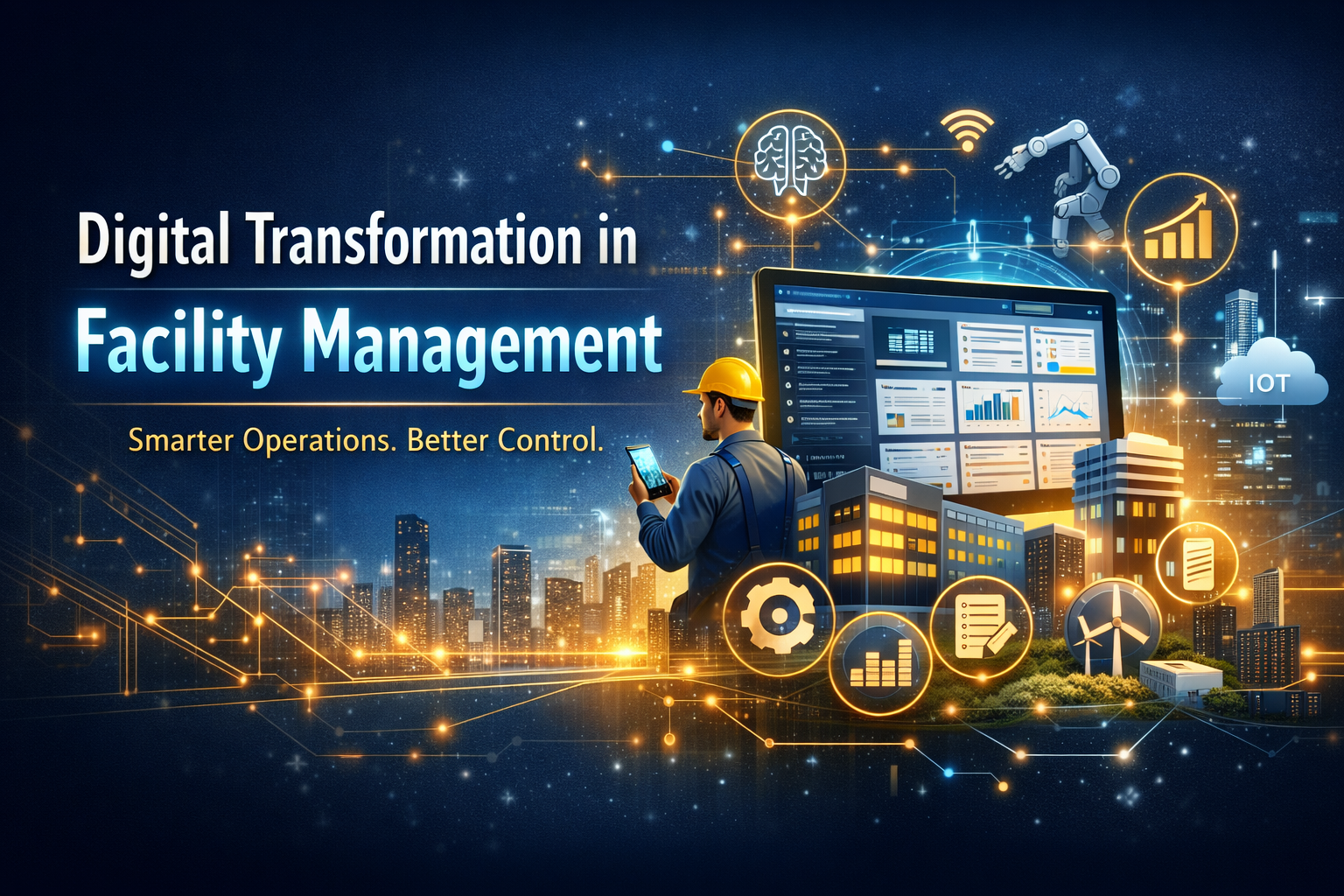
  • Digital Transformation in Facility Management: Building Smarter, More Efficient Operations

    Digital Transformation in Facility Management: Building Smarter, More Efficient Operations

    Facility management is no longer limited to maintaining buildings and responding to work orders. Modern facilities have become increasingly complex environments that require real-time visibility, faster response times, better compliance, and greater operational efficiency.

    Traditional methods based on spreadsheets, paper forms, phone calls, and disconnected software are no longer enough.

    This is why digital transformation in facility management has become essential.

    By adopting digital platforms, automation, artificial intelligence, and IoT technologies, organizations can improve the way they manage assets, maintenance, workforce, energy, compliance, and day-to-day operations.

    What is Digital Transformation in Facility Management?

    Digital transformation in facility management refers to the use of technology to improve and automate facility operations.

    Instead of relying on manual processes, organizations use digital systems to manage maintenance, assets, work orders, inspections, compliance, energy usage, and workforce coordination from a single platform.

    Digital transformation typically includes:

    • Cloud-based facility management platforms
    • Mobile applications for technicians
    • Automated work order systems
    • Real-time dashboards and reporting
    • AI and predictive analytics
    • IoT and sensor integration
    • Digital inspections and compliance tracking

    The goal is to create smarter, faster, and more efficient facility operations.

    Why Traditional Facility Management is No Longer Enough

    Many organizations still manage facilities using outdated methods.

    Common challenges include:

    • Delayed maintenance requests
    • Lack of visibility into asset condition
    • Paper-based inspections and reports
    • Missed preventive maintenance schedules
    • Difficulty tracking technician performance
    • Compliance risks and incomplete audit trails
    • Higher operational and maintenance costs

    These problems increase as facilities become larger and more complex.

    Without digital systems, facility teams often spend more time reacting to problems instead of preventing them.

    Key Technologies Driving Digital Transformation

    • Facility Management Software – Modern facility management software centralizes all operations into one platform.
      Solutions like SmartFM help organizations manage:
      • Assets
      • Work orders
      • Preventive maintenance
      • Inventory
      • Housekeeping
      • Compliance
      • Vendor management

    This gives facility managers a complete view of operations in real time.

    • Mobile Applications for Field Teams – Mobile apps are transforming how technicians and supervisors work.
      With mobile facility management applications, teams can:
      • Receive work orders instantly
      • Update task status in real time
      • Capture photos and signatures
      • Access asset history
      • Record inspection results on site

    This improves response time, reduces paperwork, and increases workforce productivity.

    • Artificial Intelligence and Predictive Maintenance – Artificial intelligence is helping facility teams move from reactive maintenance to predictive maintenance.
      AI systems analyze data from assets and identify patterns that indicate future failures. This allows organizations to:
      • Detect issues before equipment fails
      • Reduce unplanned downtime
      • Improve asset life
      • Lower maintenance costs

    For example, an HVAC unit showing unusual vibration or temperature readings can automatically trigger a maintenance request before it breaks down.

    • IoT and Smart Sensors – IoT sensors play a major role in modern facility management. Sensors can monitor:
      • Temperature
      • Energy usage
      • Occupancy
      • Water leakage
      • Equipment condition
      • Indoor air quality

    These sensors send real-time data to facility platforms, allowing organizations to monitor operations continuously and respond faster.

    Benefits of Digital Transformation in Facility Management

    Organizations that implement digital facility management solutions gain several advantages.

    • Improved Operational Efficiency – Automated workflows reduce manual work and help teams complete tasks faster.
    • Better Asset Performance – Digital systems help track asset history, maintenance schedules, and performance.
    • Lower Costs – Preventive and predictive maintenance reduce repair costs and unplanned downtime.
    • Stronger Compliance – Digital records, inspections, and audit trails make it easier to meet regulatory and safety requirements.
    • Real-Time Visibility – Managers can view dashboards and reports showing the current status of assets, maintenance, technicians, and operations.

    How SmartFM Supports Digital Transformation

    SmartFM is a complete facility management platform designed to support digital transformation across modern organizations.

    SmartFM combines multiple modules into a single system, including:

    • CAFM
    • CMMS
    • IWMS
    • Inventory Management
    • Energy Management
    • Housekeeping
    • Compliance and Inspections
    • Mobile Applications
    • IoT Integration

    With SmartFM, organizations can digitize every part of their facility operations and gain complete control through a centralized platform.

    Key SmartFM capabilities include:

    • Automated preventive maintenance
    • Mobile technician apps
    • Real-time dashboards
    • Asset lifecycle management
    • Digital inspections and audits
    • AI and IoT integration

    Industries Benefiting from Digital Facility Management

    Digital transformation in facility management is valuable across many industries.

    Examples include:

    • Commercial buildings
    • Hospitals and healthcare facilities
    • Airports
    • Hotels
    • Manufacturing plants
    • Universities and schools
    • Government facilities
    • Retail malls and shopping centers

    Each of these environments requires efficient operations, compliance, and real-time management.

    The Future of Facility Management

    The future of facility management will be driven by intelligent systems.

    Over the coming years, organizations will increasingly adopt:

    • AI-powered predictive maintenance
    • Smart building automation
    • Digital twins
    • Autonomous inspections
    • Energy optimization systems
    • Integrated workplace management systems

    Facility management will continue to move from manual and reactive operations toward connected, data-driven, and intelligent environments.

    Digital transformation is reshaping the way facilities are managed.

    Organizations that continue to rely on manual processes risk higher costs, inefficiencies, and limited operational visibility.

    By adopting modern technologies such as facility management software, AI, IoT, and mobile applications, organizations can improve efficiency, reduce costs, and build smarter facilities.

    SmartFM provides the digital foundation needed to support this transformation and help organizations create intelligent, future-ready operations.

    Frequently Asked Questions

    What is The Stories Book about?

    This exquisite compilation showcases a diverse array of photographs that capture the essence of different eras and cultures, reflecting the unique styles and perspectives of each artist.

    How much does The Stories Book cost?

    This exquisite compilation showcases a diverse array of photographs that capture the essence of different eras and cultures, reflecting the unique styles and perspectives of each artist.

    When will The Stories Book be released?

    This exquisite compilation showcases a diverse array of photographs that capture the essence of different eras and cultures, reflecting the unique styles and perspectives of each artist.

    Are signed copies available?

    This exquisite compilation showcases a diverse array of photographs that capture the essence of different eras and cultures, reflecting the unique styles and perspectives of each artist.

    Frequently Asked Questions

    What is digital transformation in facility management?

    Digital transformation in facility management means using technology such as software, AI, IoT, and automation to improve facility operations.

    Why is digital transformation important for facility management?

    It improves operational efficiency, reduces costs, strengthens compliance, and provides better visibility into assets and maintenance activities.

    What technologies are used in digital facility management?

    Common technologies include facility management software, mobile applications, AI, IoT sensors, predictive maintenance, and cloud platforms.

    How does SmartFM support digital transformation?

    SmartFM provides a centralized platform with CAFM, CMMS, mobile apps, compliance tracking, inventory management, and IoT integration.

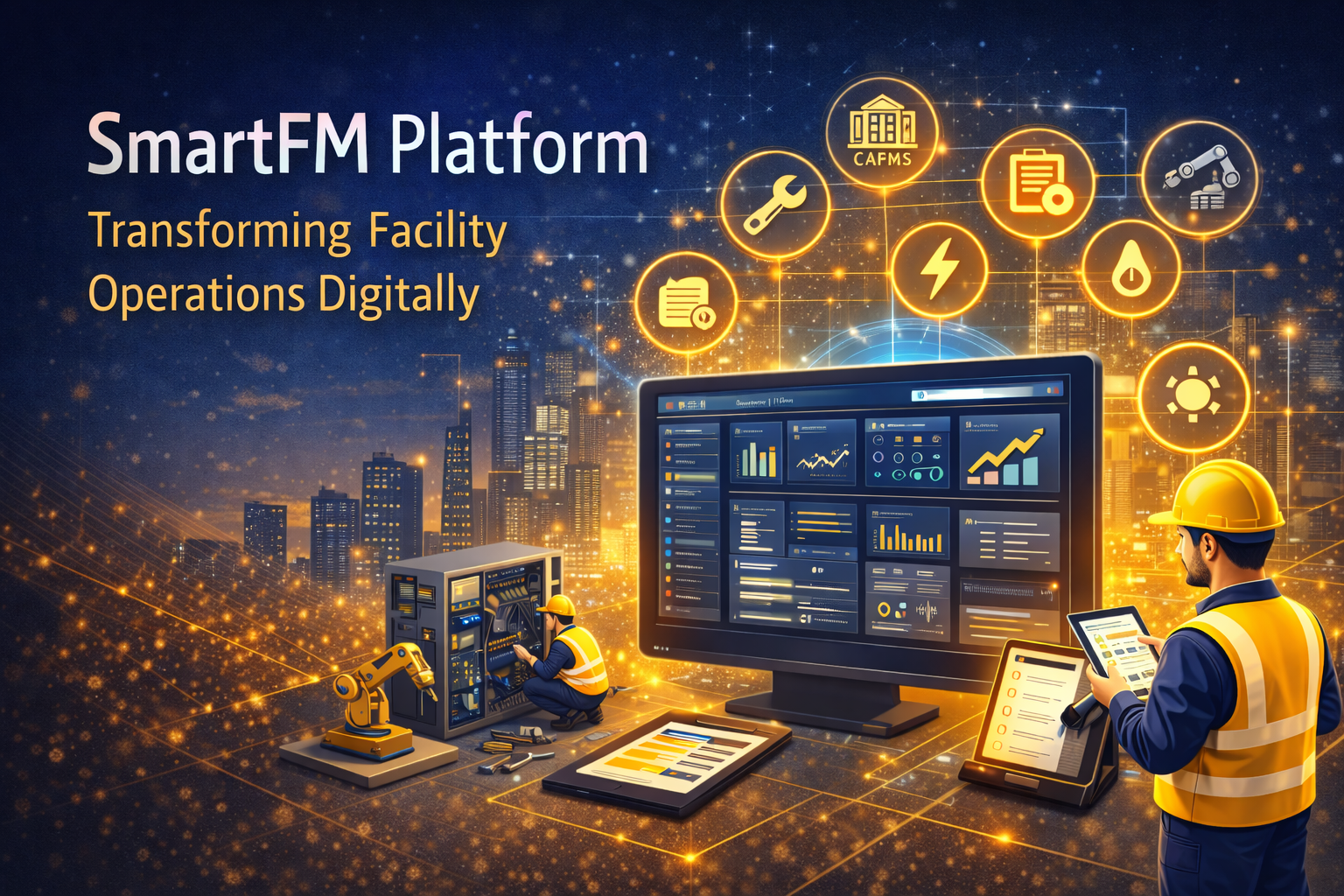
  • SmartFM Platform: Transforming Facility Operations Digitally

    SmartFM Platform: Transforming Facility Operations Digitally

    Facility operations today are more complex than ever.

    Organizations must manage maintenance, assets, technicians, inspections, compliance, inventory, energy consumption, housekeeping, and service requests across multiple sites and buildings.

    Many organizations believe they are already digital because they use email, spreadsheets, ERP systems, and mobile applications. However, when operations are still managed through disconnected systems, manual approvals, and siloed data, they are not truly digital. This is often digital decoration rather than digital transformation.

    This is where SmartFM makes the difference.

    SmartFM is a complete digital platform designed to help organizations manage all facility operations from a single, integrated system.

    What is SmartFM?

    SmartFM is an enterprise facility management platform that combines multiple operational systems into one connected solution.

    Instead of using separate software for maintenance, inspections, inventory, compliance, and workforce management, SmartFM brings everything together through a single platform.

    SmartFM supports:

    • CAFM
    • CMMS
    • IWMS
    • Inventory Management
    • Energy Management
    • Housekeeping Management
    • Compliance and Audits
    • Mobile Applications
    • IoT and Smart Building Integration

    The result is a connected environment where information flows seamlessly across departments and operations.

    Why Organizations Need an Integrated Platform

    Many organizations still operate with disconnected systems.

    For example:

    • Maintenance is managed in one software
    • Inventory is tracked in spreadsheets
    • Inspections are recorded on paper
    • Service requests are handled through email
    • Compliance documents are stored separately

    This creates serious operational problems:

    • Delayed response times
    • Duplicate work
    • Lack of visibility
    • Missed maintenance schedules
    • Higher operational costs
    • Difficulty proving compliance

    An integrated platform solves these issues by centralizing all operations.

    Core Modules of SmartFM

    CAFM and Facility Management

    SmartFM includes a powerful CAFM module that helps organizations manage:

    • Assets and equipment
    • Space and building information
    • Service requests
    • Facility operations
    • Asset lifecycle tracking

    This provides a complete view of the facility environment.

    CMMS and Maintenance Management

    SmartFM includes advanced CMMS capabilities to support:

    • Preventive maintenance
    • Corrective maintenance
    • Predictive maintenance
    • Work order management
    • Technician scheduling

    Maintenance teams can create, assign, and track work orders in real time.

    Compliance and Inspections

    Regulatory requirements are becoming more important across all industries.

    SmartFM helps organizations manage:

    • Safety inspections
    • Audit checklists
    • Compliance reporting
    • Digital certificates
    • Document history

    Every inspection and maintenance activity is stored digitally, making it easier to meet audit and regulatory requirements.

    Inventory and Spare Parts Management

    SmartFM helps facility teams manage spare parts, materials, and inventory from one system.

    Organizations can:

    • Track stock levels
    • Monitor spare parts usage
    • Prevent shortages
    • Improve procurement planning

    This reduces delays caused by unavailable materials.

    Energy Management and Sustainability

    Energy is one of the largest operational costs in modern facilities.

    SmartFM includes energy management capabilities that allow organizations to:

    • Monitor electricity and water consumption
    • Identify waste and inefficiencies
    • Track sustainability performance
    • Improve energy efficiency

    These insights help organizations reduce costs and support sustainability goals.

    Mobile Applications for Field Teams

    SmartFM includes mobile apps for technicians, supervisors, inspectors, and facility teams.

    Using the mobile application, teams can:

    • Receive work orders instantly
    • Update task status on site
    • Upload photos and reports
    • Capture signatures
    • Record inspections in real time

    This improves response times and eliminates paper-based processes.

    SmartFM and Digital Transformation

    Digital transformation is not simply about adding more software.

    It is about changing how the organization operates.

    A truly digital organization has:

    • Connected processes
    • Real-time visibility
    • Automated workflows
    • Integrated systems
    • Faster decision-making

    SmartFM supports this transformation by connecting every part of facility operations into one intelligent platform.

    Instead of working in silos, maintenance, compliance, inventory, energy, and workforce teams can collaborate through a shared system.

    SmartFM and Smart Buildings

    Modern buildings are increasingly connected through sensors, IoT devices, and automation systems.

    SmartFM integrates with:

    • IoT sensors
    • Smart meters
    • Building Management Systems (BMS)
    • Access control systems
    • HVAC and utility systems

    This allows organizations to monitor buildings in real time and respond automatically to issues.

    For example:

    • A sensor detects abnormal temperature in equipment
    • SmartFM automatically generates a maintenance work order
    • The technician receives the task on a mobile device
    • The issue is resolved before a failure occurs

    This is how smart buildings become truly intelligent.

    Industries Using SmartFM

    SmartFM is designed for a wide range of industries, including:

    • Commercial buildings
    • Hospitals and healthcare
    • Hotels and hospitality
    • Airports
    • Universities and schools
    • Manufacturing facilities
    • Government buildings
    • Retail malls

    Each industry can customize SmartFM based on its specific operational needs.

    Benefits of SmartFM Platform

    Organizations implementing SmartFM typically achieve:

    • Reduced maintenance costs
    • Improved asset performance
    • Faster response times
    • Better compliance management
    • Lower operational risk
    • Increased workforce productivity
    • Better visibility into operations

    By replacing disconnected systems with a single platform, organizations gain better control and better results.

    Facility operations are becoming more complex, and traditional methods are no longer enough.

    Organizations need a platform that connects maintenance, compliance, assets, energy, inspections, and workforce management into one system.

    SmartFM provides that platform.

    By digitizing and integrating facility operations, SmartFM helps organizations improve efficiency, reduce costs, strengthen compliance, and prepare for the future of smart buildings.

    Frequently Asked Questions

    What is SmartFM?

    SmartFM is a digital facility management platform that combines CAFM, CMMS, compliance, inventory, energy management, mobile apps, and IoT integration into one system.

    What industries can use SmartFM?

    SmartFM can be used in commercial buildings, healthcare, hospitality, airports, universities, manufacturing, retail, and government facilities.

    How does SmartFM support digital transformation?

    SmartFM connects all facility operations through one platform, replacing disconnected systems and manual processes.

    Does SmartFM support mobile applications?

    Yes. SmartFM includes mobile applications that allow technicians and supervisors to manage work orders, inspections, and maintenance tasks in real time.

    Can SmartFM integrate with IoT and smart building systems?

    Yes. SmartFM can integrate with IoT sensors, smart meters, BMS systems, HVAC systems, and other building technologies.

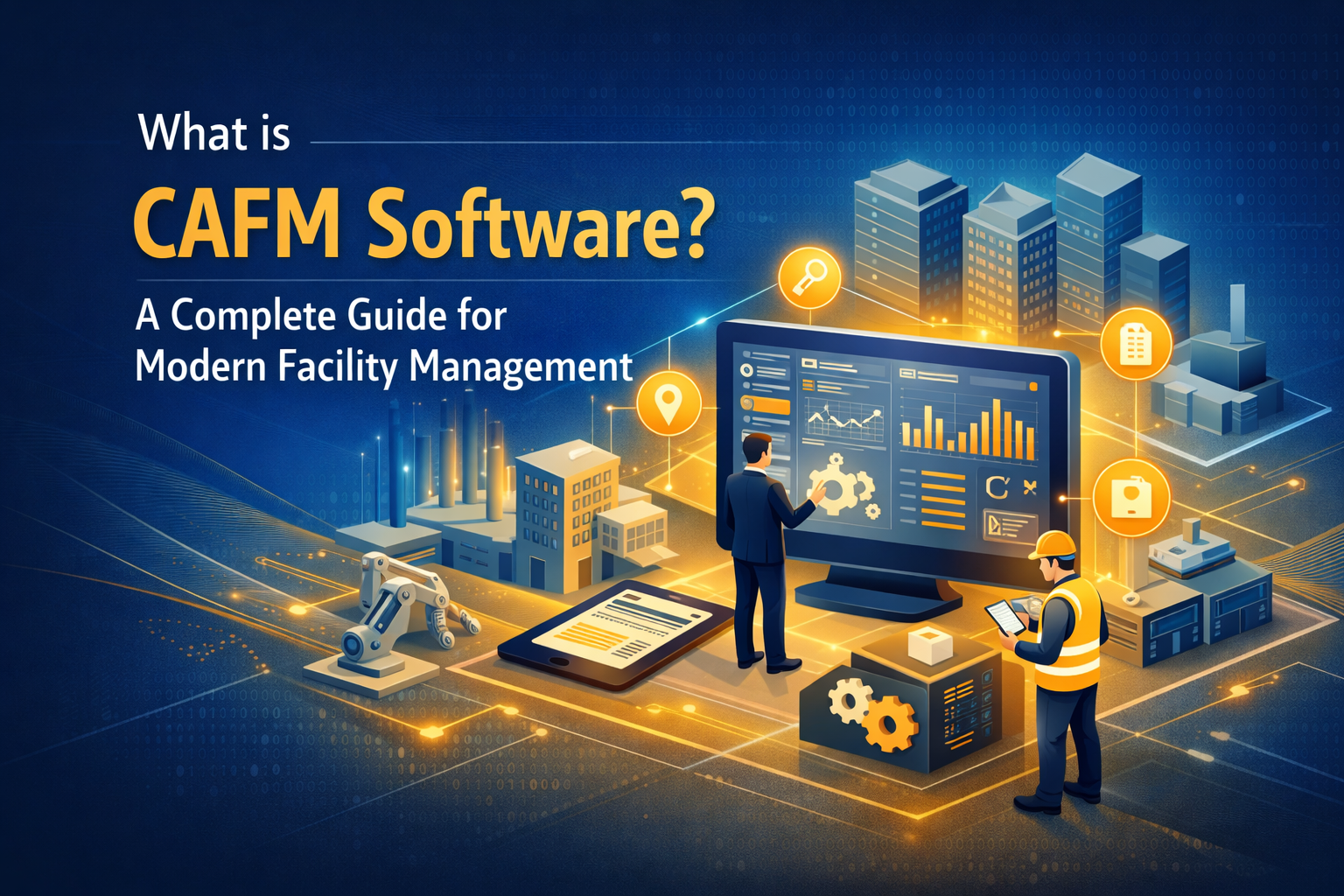
  • What is CAFM Software? A Complete Guide for Modern Facility Management

    What is CAFM Software? A Complete Guide for Modern Facility Management

    Modern facilities such as commercial towers, hospitals, airports, and large campuses are becoming increasingly complex to manage. Facility teams must monitor maintenance operations, manage assets, track compliance, and coordinate technicians across multiple locations.

    Manual processes and disconnected systems often result in delayed maintenance, higher operational costs, and limited visibility.

    This is where CAFM software (Computer Aided Facility Management) plays an essential role.

    CAFM platforms provide a centralized digital system that helps organizations manage facility operations, assets, maintenance activities, and operational workflows efficiently.

    What is CAFM Software

    CAFM software is a digital platform designed to help organizations manage facilities, infrastructure, assets, and operational processes.

    It allows facility managers to organize maintenance activities, track equipment performance, and optimize resource utilization through a centralized system.

    Typical CAFM capabilities include:

    • Asset lifecycle management
    • Preventive maintenance scheduling
    • Work order automation
    • Space management
    • Compliance tracking
    • Inventory integration

    By digitizing facility operations, CAFM platforms improve operational transparency and enable proactive maintenance management.

    Why Organizations Need CAFM Systems

    Organizations managing large facilities face several operational challenges when relying on manual systems or disconnected tools.

    Common issues include:

    • Reactive maintenance processes
    • Limited asset visibility
    • Operational inefficiencies
    • Compliance risks
    • Higher maintenance costs

    A CAFM platform helps organizations transition from reactive maintenance toward proactive and data-driven facility management.

    Key Features of SmartFM CAFM Platform

    SmartFM is an advanced facility management platform developed to support modern enterprise facilities.

    The SmartFM CAFM module includes several capabilities that help organizations streamline operations and improve efficiency.

    Key features include:

    • Asset lifecycle management
    • Preventive maintenance scheduling
    • Automated work order management
    • Mobile technician applications
    • Compliance and inspection tracking
    • Inventory and spare parts management
    • Energy monitoring integration

    These modules allow facility teams to manage complex operational environments through a single digital platform.

    Benefits of Implementing CAFM Software

    Organizations that implement CAFM systems often experience significant operational improvements.

    Key benefits include:

    • Reduced maintenance costs
    • Improved asset reliability
    • Higher workforce productivity
    • Better compliance tracking
    • Improved operational transparency

    CAFM systems enable facility teams to make informed decisions based on real-time operational data.

    CAFM, AI and Smart Buildings

    Modern facility platforms are increasingly integrated with artificial intelligence and IoT technologies.

    These integrations enable advanced capabilities such as:

    • Predictive maintenance
    • Automated equipment monitoring
    • Energy optimization
    • Real time asset performance tracking

    With these technologies, buildings evolve from static infrastructure into intelligent operational environments.

    Facility management is rapidly evolving as organizations adopt digital platforms to manage increasingly complex environments.

    CAFM software provides the operational visibility, automation, and control needed to manage modern facilities effectively.

    Platforms like SmartFM help organizations transform facility management into a strategic operational advantage.

    Frequently Asked Questions

    What is CAFM software used for?

    CAFM software helps organizations manage facilities, maintenance operations, assets, work orders, and compliance processes.

    What is the difference between CAFM and CMMS?

    CAFM focuses on facility operations including space management and assets, while CMMS focuses mainly on maintenance management.

    Who uses CAFM software?

    CAFM systems are used by facility managers, property managers, maintenance teams, hospitals, airports, universities, and commercial building operators.