Author: Vishal Jagetia

  • Digital Compliance Management for Modern Facilities: From Manual Audits to Intelligent Operations

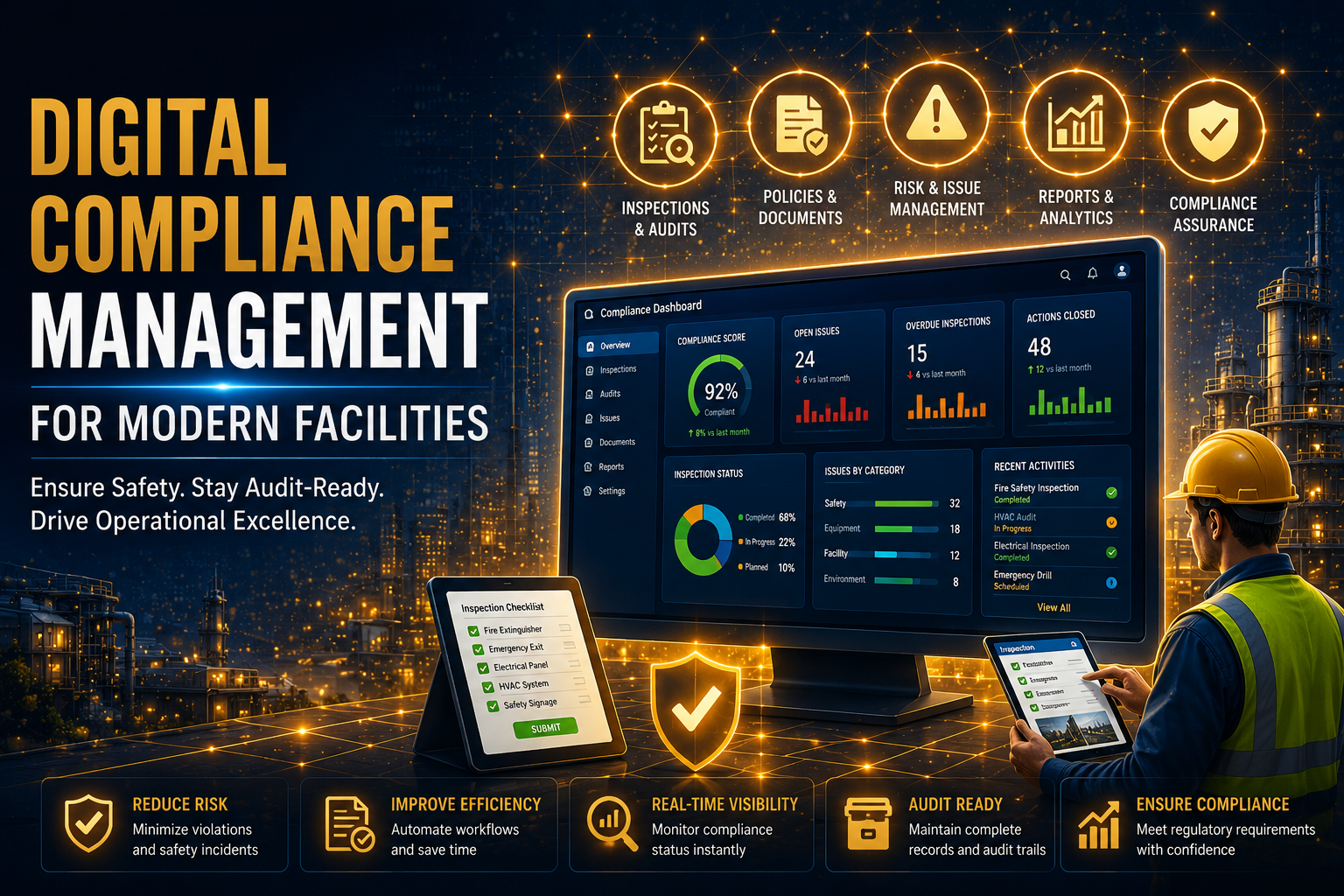
    Digital Compliance Management for Modern Facilities: From Manual Audits to Intelligent Operations

    Compliance has become one of the most critical responsibilities in modern facility management.

    Organizations today must comply with multiple regulations related to:

    • Health and safety
    • Building maintenance
    • Fire and life safety systems
    • Environmental standards
    • Operational procedures
    • Asset inspections
    • Sustainability and ESG reporting

    However, many facilities still rely on paper forms, spreadsheets, emails, and disconnected systems to manage compliance activities.

    This creates operational risks, delays, missing records, and audit challenges.

    As facilities become more complex and regulations become stricter, traditional compliance methods are no longer enough.

    This is where digital compliance management becomes essential.

    What is Digital Compliance Management?

    Digital compliance management refers to the use of technology platforms to manage inspections, audits, safety procedures, maintenance compliance, documentation, and reporting through centralized digital systems.

    Instead of relying on manual records and disconnected workflows, organizations can manage compliance in real time.

    A digital compliance platform helps organizations:

    • Schedule inspections and audits
    • Track safety procedures
    • Maintain digital records
    • Automate alerts and reminders
    • Generate compliance reports
    • Maintain audit trails
    • Monitor regulatory requirements

    This improves operational control and reduces compliance risks.

    Why Traditional Compliance Processes Fail

    Many organizations still manage compliance manually.

    Common processes include:

    • Paper inspection forms
    • Spreadsheet tracking
    • Email approvals
    • Physical filing systems
    • Separate systems for maintenance and compliance

    These methods often lead to:

    • Missed inspections
    • Incomplete records
    • Delayed corrective actions
    • Lack of visibility into compliance status
    • Difficulty during audits
    • Higher operational risk

    Organizations may believe they are digital because they use modern software tools. However, when compliance workflows remain disconnected and manual, the organization is not truly digital. This is often digital decoration rather than digital transformation.

    Key Components of Digital Compliance Systems

    Inspection Management

    Digital platforms help schedule and manage routine inspections.

    This includes:

    • Safety inspections
    • Equipment inspections
    • Facility walkthroughs
    • Environmental checks
    • Preventive maintenance audits

    Inspectors can complete checklists digitally using mobile applications.

    Audit Management

    Compliance platforms maintain detailed audit trails and historical records.

    Organizations can track:

    • Audit findings
    • Non-compliance issues
    • Corrective actions
    • Approval workflows
    • Compliance status

    This simplifies regulatory reviews and external audits.

    Automated Alerts and Notifications

    Digital systems automatically notify teams about:

    • Upcoming inspections
    • Expiring certifications
    • Missed maintenance activities
    • Compliance violations
    • Pending corrective actions

    This reduces the risk of missed deadlines.

    Document and Certificate Management

    Compliance systems centralize important documents such as:

    • Safety certificates
    • Regulatory approvals
    • Inspection reports
    • Equipment documentation
    • Training records

    This ensures information is accessible and secure.

    Mobile Compliance Applications

    Mobile apps allow inspectors and technicians to:

    • Complete inspections on site
    • Upload photos and evidence
    • Capture signatures
    • Record issues instantly
    • Generate digital reports

    This improves efficiency and eliminates paperwork.

    Importance of Compliance in Modern Facilities

    Compliance is no longer just about avoiding penalties.

    It directly impacts:

    • Operational continuity
    • Employee safety
    • Asset reliability
    • Business reputation
    • Sustainability goals
    • Insurance and liability risks

    Organizations that fail to manage compliance effectively may face:

    • Operational shutdowns
    • Financial penalties
    • Legal liabilities
    • Increased safety incidents
    • Loss of certifications

    Digital systems help organizations reduce these risks through proactive management.
    Role of AI and IoT in Compliance Management

    Modern compliance systems increasingly integrate with AI and IoT technologies.

    IoT Sensors

    IoT devices monitor:

    • Fire systems
    • HVAC performance
    • Temperature and humidity
    • Equipment conditions
    • Occupancy levels
    • Water leakage

    These sensors provide real-time operational visibility.

    Artificial Intelligence

    AI helps organizations:

    • Predict compliance risks
    • Detect anomalies
    • Identify recurring issues
    • Automate reporting
    • Analyze inspection trends

    AI-driven compliance systems improve decision-making and operational intelligence.

    How SmartFM Supports Digital Compliance

    SmartFM provides integrated compliance management capabilities designed for modern facility environments.

    SmartFM helps organizations manage:

    • Inspections and audits
    • Safety checklists
    • Preventive maintenance compliance
    • Regulatory reporting
    • Digital documentation
    • Mobile inspections
    • Real-time dashboards and alerts

    By integrating compliance with CAFM, CMMS, IoT, and facility operations, SmartFM creates a centralized operational ecosystem.

    For example:

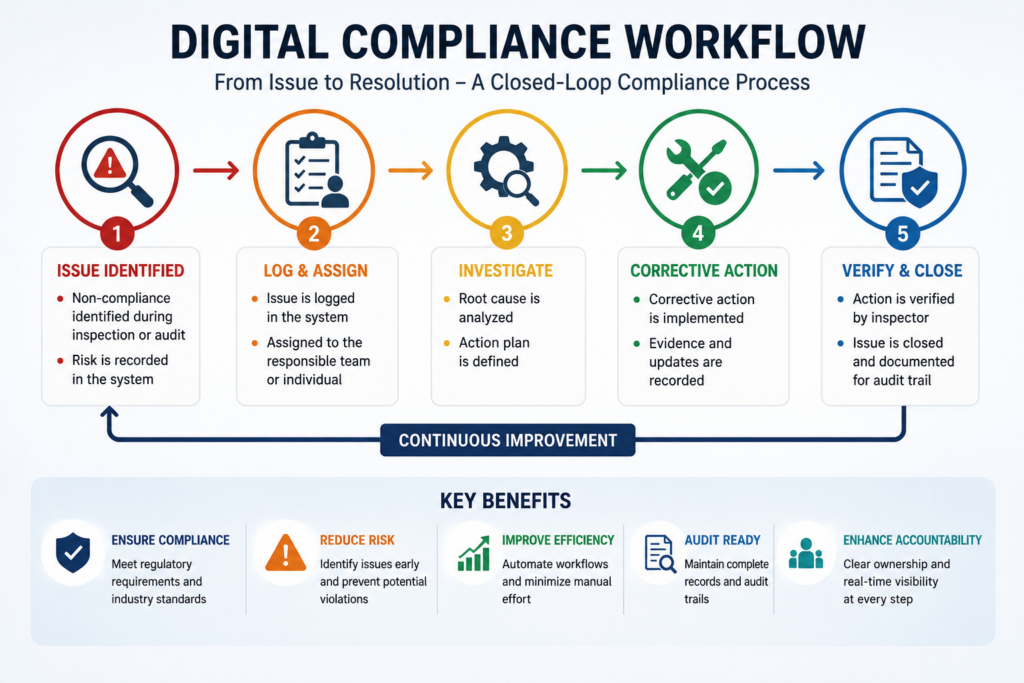
    • An inspection identifies an HVAC issue
    • SmartFM automatically creates a work order
    • The technician receives the task through the mobile app
    • Corrective action is completed and documented digitally
    • The audit trail is updated automatically

    This creates a complete, connected compliance workflow.

    Industries Benefiting from Digital Compliance Management

    Digital compliance systems are essential across industries such as:

    • Healthcare and hospitals
    • Airports and transportation
    • Commercial real estate
    • Hospitality and hotels
    • Manufacturing and industrial facilities
    • Government and public sector
    • Educational institutions

    These environments require strict operational and safety compliance.

    The Future of Compliance Management

    The future of compliance management will become increasingly intelligent and automated.

    Future systems will include:

    • AI-driven risk prediction
    • Automated inspections
    • Real-time compliance scoring
    • Smart regulatory dashboards
    • Digital twins for compliance monitoring
    • Predictive maintenance integration

    Compliance management will move from reactive auditing toward continuous operational intelligence.

    Modern facility compliance requires more than manual inspections and paper records.

    Organizations need intelligent systems that provide visibility, automation, auditability, and real-time control.

    Digital compliance management helps organizations improve operational safety, reduce risks, strengthen reporting, and simplify audits.

    Platforms like SmartFM enable organizations to transform compliance from a reactive process into a proactive and intelligent operational strategy.

    Frequently Asked Questions

    What is digital compliance management?

    Digital compliance management uses software platforms to manage inspections, audits, safety procedures, records, and compliance workflows digitally.

    How does SmartFM support compliance management?

    SmartFM provides inspection management, audit tracking, mobile apps, alerts, reporting, and digital audit trails in a centralized platform.

    Why is digital compliance important?

    It improves operational visibility, reduces risks, simplifies audits, and helps organizations maintain regulatory compliance.

    What industries need compliance management systems?

    Industries such as healthcare, airports, commercial buildings, manufacturing, hospitality, and government facilities require compliance management systems.
  • Energy Management Systems for Smart Buildings: Driving Efficiency and Sustainability

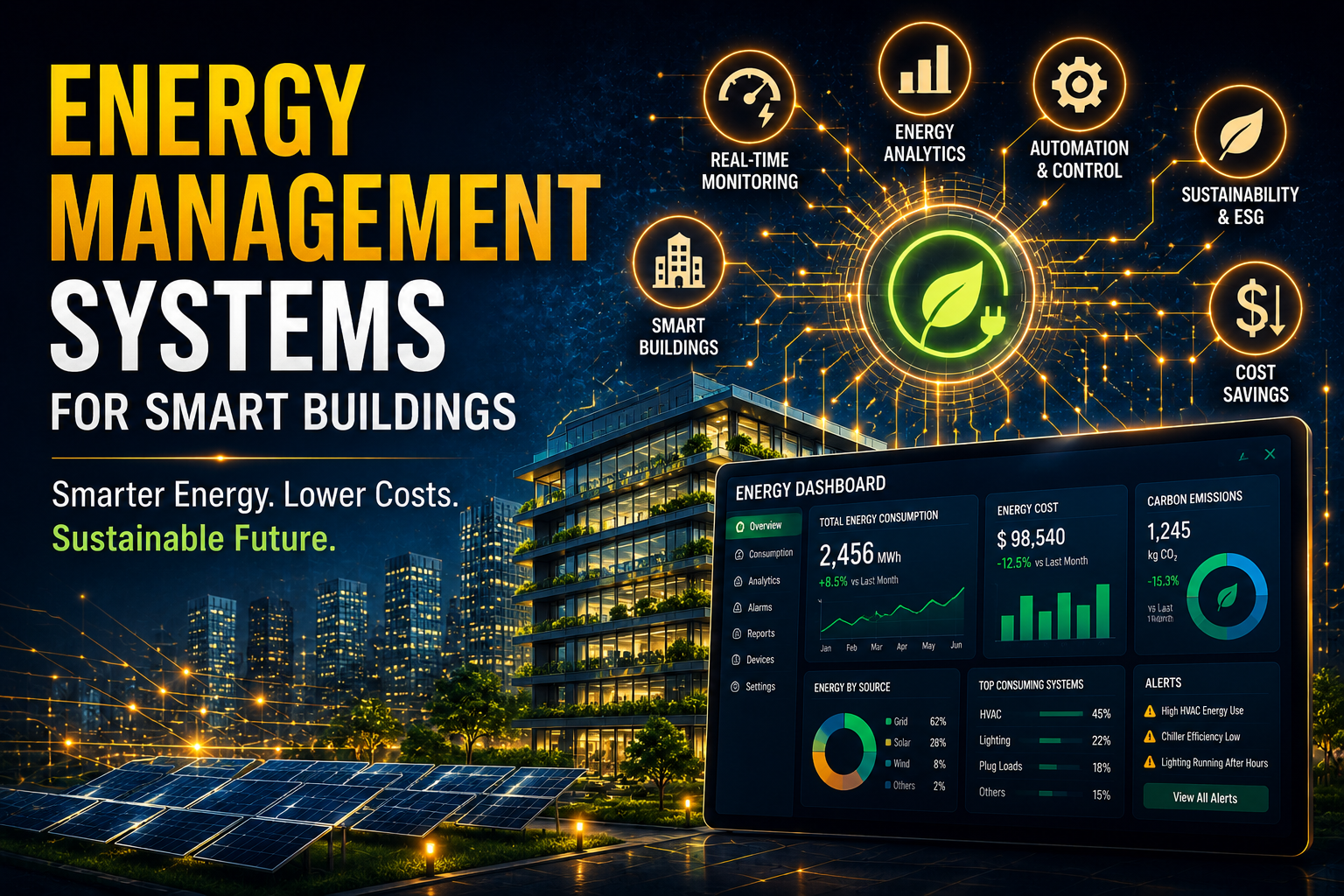
    Energy Management Systems for Smart Buildings: Driving Efficiency and Sustainability

    Energy has become one of the largest operational costs for modern facilities and buildings.

    Commercial towers, hospitals, airports, hotels, manufacturing plants, and large campuses consume enormous amounts of electricity, water, and utilities every day.

    At the same time, organizations are under increasing pressure to reduce operational costs, improve sustainability, and meet ESG and environmental compliance goals.

    Traditional energy monitoring methods are no longer enough.

    Monthly utility bills and manual reporting provide very limited visibility into how energy is consumed across facilities.

    This is why Energy Management Systems (EMS) have become essential for smart buildings.

    Modern EMS platforms help organizations monitor, analyze, optimize, and automate energy usage through real-time data and intelligent systems.

    What is an Energy Management System?

    An Energy Management System (EMS) is a digital platform used to monitor, control, and optimize energy consumption across buildings and facilities.

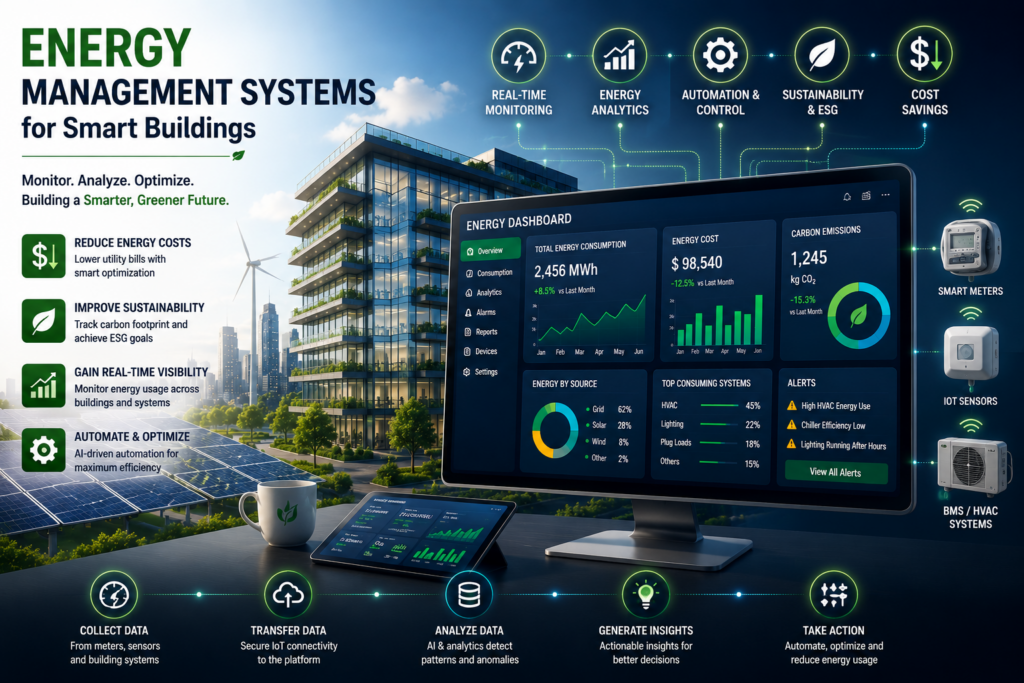
    EMS platforms collect data from multiple systems and devices, including:

    • Electricity meters
    • Water meters
    • HVAC systems
    • Lighting systems
    • IoT sensors
    • Renewable energy systems
    • Building Management Systems (BMS)

    The system analyzes this data and provides insights that help organizations reduce waste and improve efficiency.

    Why Smart Buildings Need Energy Management Systems

    Modern smart buildings generate large amounts of operational data.

    Without intelligent monitoring systems, organizations struggle to identify:

    • Energy waste
    • Equipment inefficiencies
    • Abnormal consumption patterns
    • Peak usage periods
    • HVAC overconsumption
    • Unnecessary lighting usage

    Many organizations believe they are digital because they use dashboards and software tools, while their operations remain fragmented and disconnected. True digital transformation requires connected systems where data flows seamlessly across operations.

    An EMS provides centralized visibility into energy operations and enables organizations to make data-driven decisions.

    Key Components of an EMS

    Real-Time Energy Monitoring

    EMS platforms continuously track energy usage across facilities.

    This allows organizations to identify spikes, inefficiencies, and abnormal consumption instantly.

    Smart Meter Integration

    Smart meters automatically send consumption data to the EMS platform.

    This eliminates manual meter readings and improves accuracy.

    HVAC and Lighting Optimization

    HVAC and lighting systems are often the largest energy consumers in buildings.

    EMS platforms help optimize:

    • Cooling schedules
    • Temperature settings
    • Occupancy-based lighting
    • Automatic shutdown systems

    This reduces unnecessary energy consumption.

    Analytics and Reporting

    EMS dashboards provide insights into:

    • Energy trends
    • Peak usage times
    • Cost analysis
    • Carbon footprint tracking
    • Sustainability performance

    These reports help management make informed operational decisions.

    Automated Alerts and Controls

    Modern EMS platforms can trigger alerts when energy consumption exceeds defined thresholds.

    For example:

    • HVAC operating after office hours
    • Excessive water usage
    • Sudden power spikes
    • Equipment consuming abnormal energy

    This allows facility teams to respond quickly.

    Role of IoT and AI in Energy Management

    The future of energy management is driven by AI and IoT technologies.

    IoT Sensors

    IoT devices collect real-time operational data from equipment and building systems.

    Sensors monitor:

    • Occupancy
    • Temperature
    • Humidity
    • Air quality
    • Equipment performance
    • Utility consumption

    Artificial Intelligence

    AI systems analyze energy usage patterns and recommend optimization strategies.

    AI can help:

    • Predict energy demand
    • Detect anomalies
    • Automate HVAC scheduling
    • Optimize power consumption
    • Improve sustainability performance

    This transforms energy management from reactive monitoring into intelligent optimization.

    Benefits of Energy Management Systems

    Organizations implementing EMS platforms achieve significant operational advantages.

    Reduced Energy Costs

    Continuous monitoring helps reduce unnecessary energy usage.

    Improved Sustainability

    Organizations can reduce carbon emissions and improve ESG performance.

    Better Operational Visibility

    Real-time dashboards provide complete visibility into energy consumption.

    Improved Equipment Performance

    Efficient energy usage reduces strain on equipment and systems.

    Regulatory Compliance

    EMS platforms help organizations comply with sustainability and energy regulations.

    SmartFM and Energy Management

    SmartFM includes integrated energy management capabilities designed for intelligent facilities.

    SmartFM helps organizations:

    • Monitor electricity and water usage
    • Analyze energy consumption trends
    • Integrate IoT devices and smart meters
    • Generate sustainability reports
    • Optimize HVAC and utilities
    • Improve operational efficiency

    By integrating EMS with CAFM, CMMS, IoT, and building operations, SmartFM creates a unified smart building ecosystem.

    For example:

    • IoT sensors detect high energy consumption
    • SmartFM analyzes the usage pattern
    • The system identifies inefficiencies
    • Facility teams receive automated alerts
    • Corrective action is initiated immediately

    This enables organizations to move toward intelligent and sustainable operations.

    Industries Using EMS Platforms

    Energy Management Systems are widely used across industries such as:

    • Commercial real estate
    • Hospitals and healthcare
    • Airports
    • Hotels and hospitality
    • Manufacturing facilities
    • Educational campuses
    • Government buildings
    • Smart cities

    These industries require both operational efficiency and sustainability performance.

    The Future of Smart Energy Management

    Energy management systems will continue evolving alongside smart buildings and AI technologies.

    Future EMS platforms will include:

    • AI-powered optimization
    • Predictive energy analytics
    • Automated sustainability reporting
    • Renewable energy integration
    • Smart grid connectivity
    • Carbon tracking dashboards

    Buildings of the future will not just consume energy.

    They will intelligently optimize and manage it.

    Energy management is becoming a strategic priority for modern organizations.

    As buildings become smarter and sustainability requirements increase, organizations need intelligent systems that provide real-time visibility, automation, and optimization.

    Energy Management Systems help organizations reduce costs, improve efficiency, and support long-term sustainability goals.

    Platforms like SmartFM enable this transformation by combining energy management with facility operations, IoT integration, and intelligent analytics into a single connected platform.

    Frequently Asked Questions

    What is an Energy Management System?

    An Energy Management System (EMS) is a digital platform that monitors and optimizes energy usage across facilities and buildings.

    How does AI help energy management?

    AI analyzes energy usage patterns, predicts demand, identifies inefficiencies, and automates optimization processes.

    Why are Energy Management Systems important?

    EMS platforms help reduce energy costs, improve sustainability, optimize building performance, and support ESG goals.

    Can SmartFM integrate with energy monitoring systems?

    Yes. SmartFM integrates with IoT sensors, smart meters, HVAC systems, and building management systems for centralized energy management.

  • The Future of Smart Buildings with AI and IIoT: From Infrastructure to Intelligence

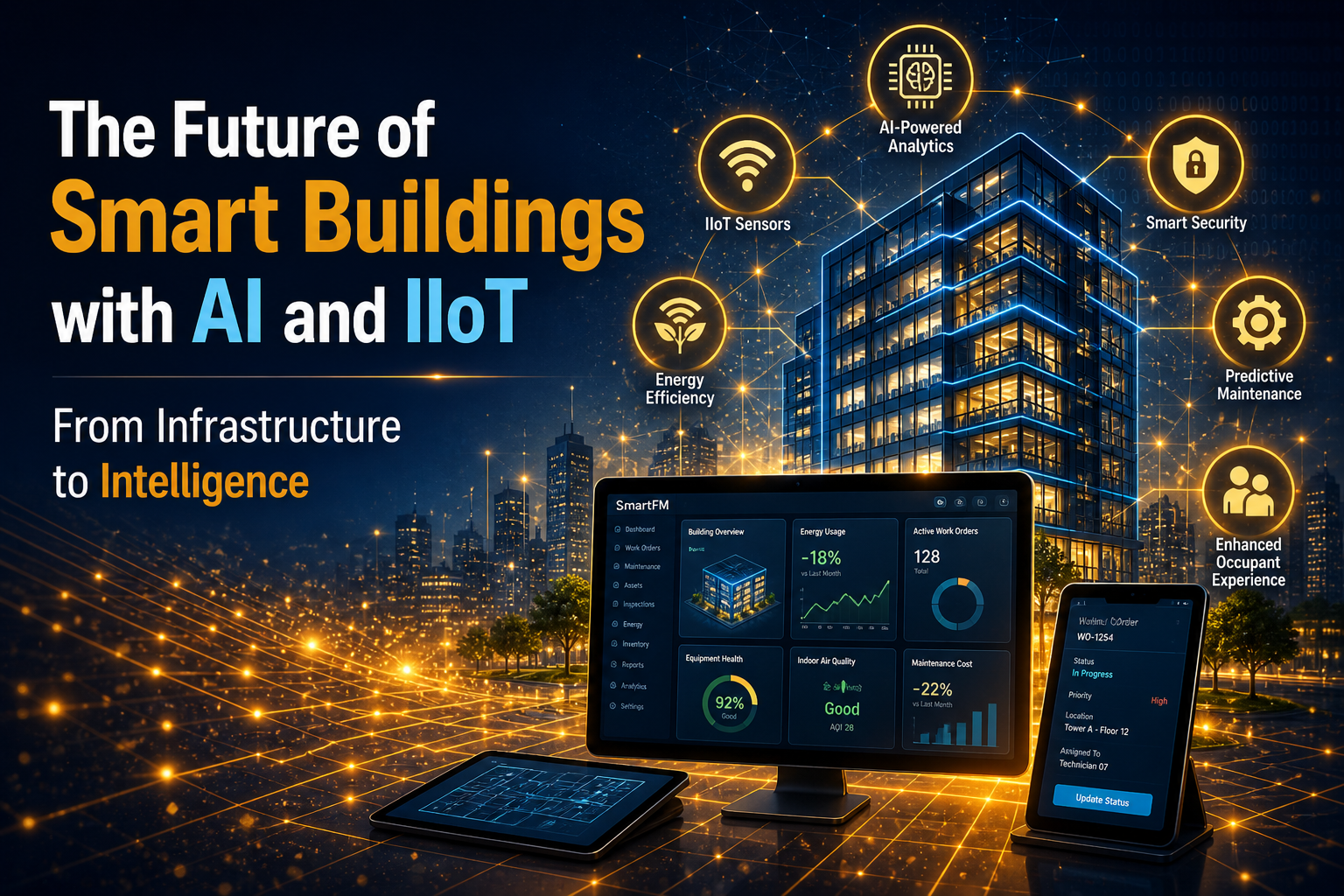
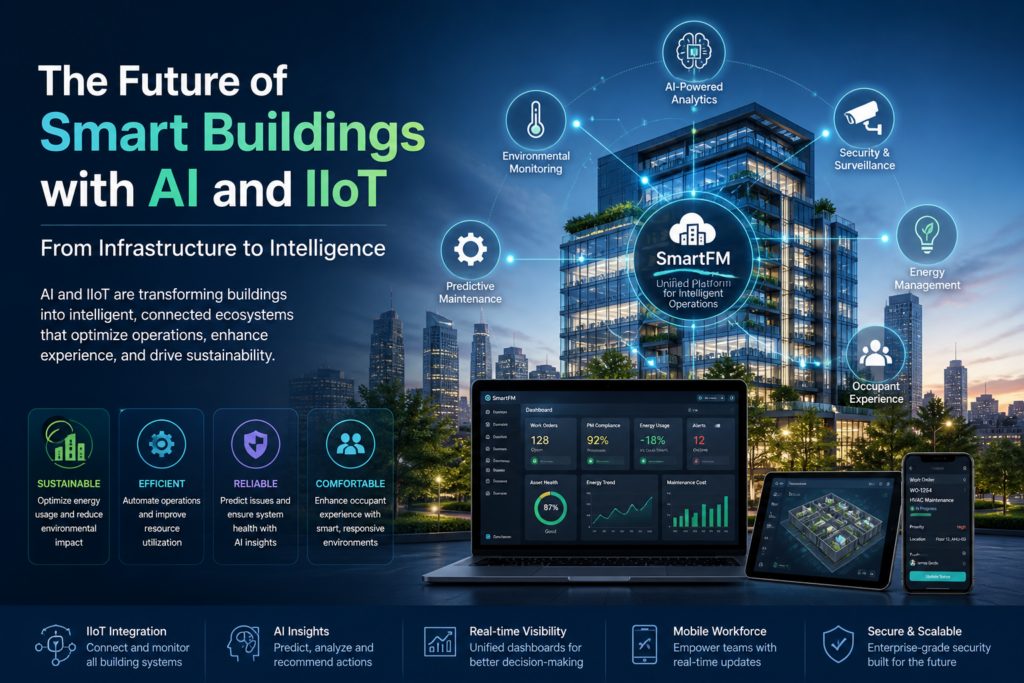
    The Future of Smart Buildings with AI and IIoT: From Infrastructure to Intelligence

    Buildings are no longer just physical structures.

    They are evolving into intelligent ecosystems that can sense, analyze, and respond to real-time conditions.

    From commercial towers and hospitals to airports and smart cities, modern infrastructure is becoming increasingly connected and data-driven.

    Artificial Intelligence (AI) and Industrial Internet of Things (IIoT) are at the core of this transformation.

    These technologies are redefining how buildings operate, shifting from manual and reactive systems to automated, predictive, and intelligent environments.

    What is a Smart Building?

    A smart building is a facility that uses digital technologies, sensors, and automation systems to monitor and manage operations in real time.

    These buildings integrate multiple systems such as:

    • Facility management platforms
    • Building Management Systems (BMS)
    • IoT sensors and devices
    • Energy management systems
    • Security and access control systems
    • Data analytics platforms

    The goal is to improve operational efficiency, reduce costs, enhance occupant comfort, and support sustainability.

    The Role of IIoT in Smart Buildings

    Industrial IoT plays a critical role in enabling smart infrastructure.

    IIoT sensors are deployed across buildings to collect real-time data from various systems.

    These sensors can monitor:

    • Temperature and humidity
    • Energy consumption
    • Equipment performance
    • Occupancy levels
    • Air quality
    • Water usage

    This continuous data flow provides complete visibility into building operations.

    Instead of relying on periodic inspections, facility teams can monitor everything in real time.

    The Role of Artificial Intelligence

    While IIoT collects data, AI transforms that data into actionable insights.

    AI systems analyze patterns, detect anomalies, and make predictions that help optimize building performance.

    AI enables:

    • Predictive maintenance
    • Energy optimization
    • Automated fault detection
    • Intelligent scheduling of operations
    • Real-time decision-making

    For example, AI can detect early signs of equipment failure and automatically trigger a maintenance request before a breakdown occurs.

    From Reactive to Predictive Operations

    Traditional facility management is reactive.

    Equipment is repaired after failure, inspections are scheduled manually, and decisions are based on past data.

    Smart buildings operate differently.

    They use real-time data and predictive analytics to anticipate issues before they occur.

    This shift results in:

    • Reduced downtime
    • Lower maintenance costs
    • Improved asset lifespan
    • Higher operational efficiency

    However, many organizations still believe they are digital because they use modern tools, while their core processes remain manual and disconnected. This gap between tools and actual transformation is often referred to as digital decoration.

    True smart buildings require connected systems and integrated intelligence.

    SmartFM and Intelligent Facility Management

    SmartFM plays a key role in enabling smart buildings by integrating AI, IIoT, and facility management into a single platform.

    SmartFM connects:

    • CAFM and CMMS systems
    • IoT sensors and devices
    • Energy management systems
    • Compliance and inspections
    • Mobile workforce applications

    This allows organizations to manage buildings through a centralized digital ecosystem.

    For example:

    • Sensors detect abnormal energy consumption
    • SmartFM analyzes the data
    • The system identifies inefficiencies
    • A work order is automatically generated
    • The technician receives the task via mobile app

    This creates a fully connected and automated operational workflow.

    Benefits of Smart Buildings with AI and IIoT

    Organizations adopting smart building technologies gain significant advantages.

    Improved Energy Efficiency

    Real-time monitoring helps reduce energy waste and optimize consumption.

    Predictive Maintenance

    AI detects potential failures before they happen, reducing downtime.

    Enhanced Occupant Experience

    Smart environments improve comfort, safety, and convenience.

    Better Operational Control

    Centralized dashboards provide full visibility across all systems.

    Sustainability and ESG Compliance

    Smart buildings support environmental goals through optimized resource usage.

    Use Cases Across Industries

    Smart building technology is being adopted across multiple industries.

    • Commercial real estate
    • Airports and transportation hubs
    • Hospitals and healthcare facilities
    • Hotels and hospitality
    • Universities and campuses
    • Manufacturing and industrial facilities
    • Government and smart city projects

    Each industry benefits from improved efficiency, automation, and real-time control.

    The Future of Smart Buildings

    The next phase of smart buildings will go beyond automation.

    Future developments will include:

    • Autonomous building systems
    • Digital twins for infrastructure
    • AI-driven decision-making
    • Fully integrated smart city ecosystems
    • Advanced sustainability and carbon tracking systems

    Buildings will not only respond to conditions but will continuously learn and optimize themselves.

    Smart buildings are redefining the future of infrastructure.

    AI and IIoT technologies are transforming buildings into intelligent systems that can monitor, analyze, and optimize operations in real time.

    Organizations that adopt these technologies will gain a competitive advantage through efficiency, cost savings, and improved sustainability.

    Platforms like SmartFM enable this transformation by connecting systems, automating workflows, and providing real-time insights.

    The future of buildings is not just smart.

    It is intelligent, connected, and continuously evolving.

    Frequently Asked Questions

    What is a smart building?

    A smart building uses digital technologies, sensors, and automation systems to monitor and manage operations in real time.

    What is IIoT in facility management?

    IIoT refers to connected sensors and devices that collect real-time data from building systems.

    How does AI help in smart buildings?

    AI analyzes data, predicts failures, optimizes energy usage, and automates building operations.

    What are the benefits of smart buildings?

    Smart buildings improve efficiency, reduce costs, enhance occupant experience, and support sustainability.

    How does SmartFM support smart buildings?

    SmartFM integrates AI, IoT, maintenance, compliance, and operations into a single platform for intelligent facility management.

  • ERP system integrated with facility management and SmartFM platform

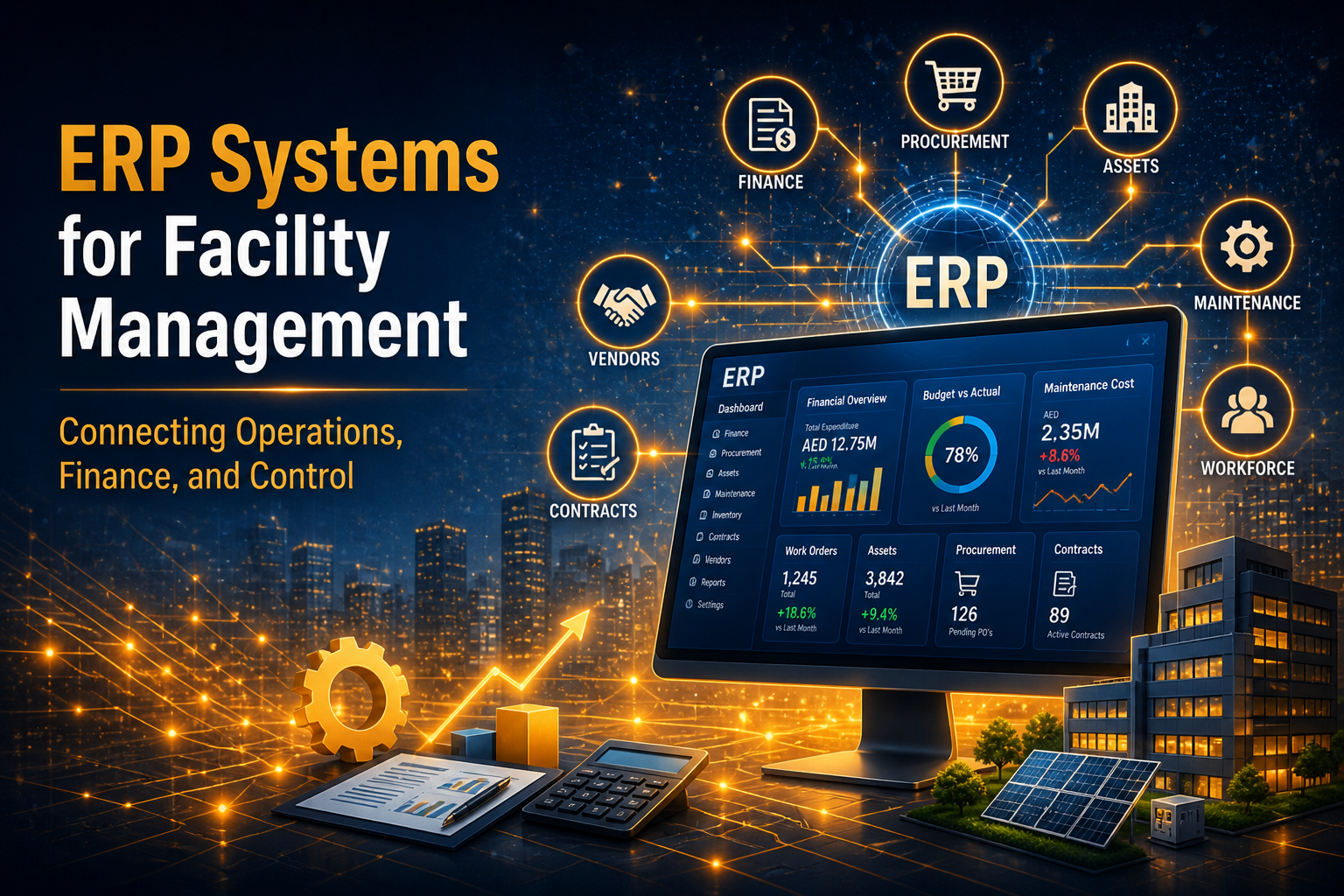
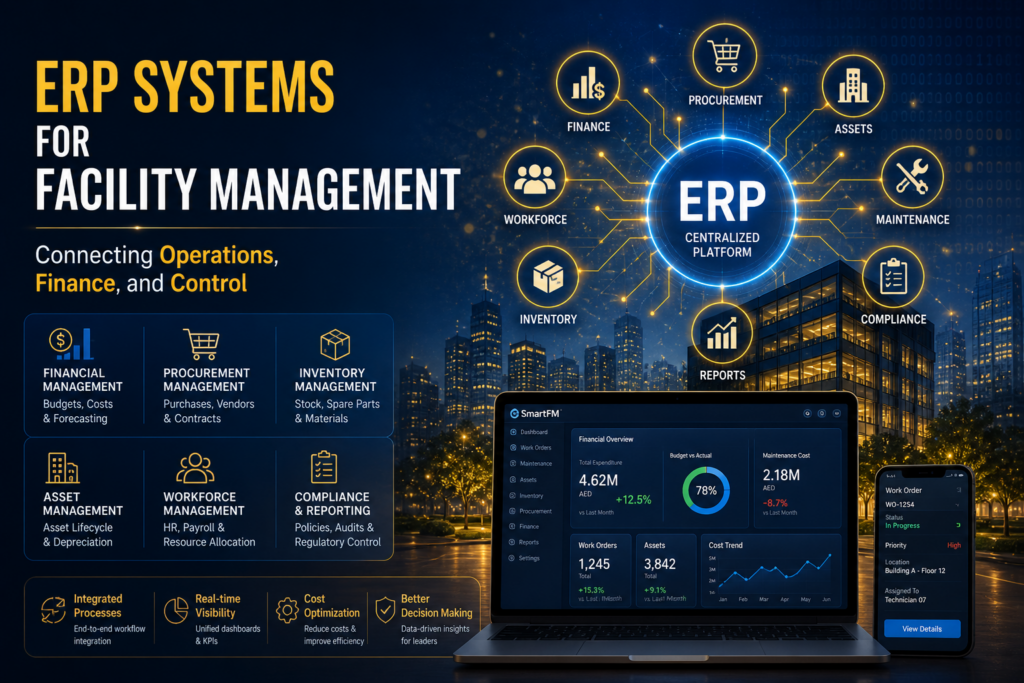
    ERP system integrated with facility management and SmartFM platform

    Facility management is no longer limited to maintenance and operations.

    Today, organizations must manage finances, procurement, contracts, assets, workforce, and compliance alongside day-to-day facility activities.

    However, in many organizations, these functions are handled in separate systems.

    Finance operates in ERP.
    Maintenance is managed in CMMS.
    Assets are tracked in spreadsheets.
    Procurement is handled manually.

    This fragmentation creates inefficiencies, delays, and lack of visibility.

    Many organizations assume they are digitally advanced because they use ERP systems. But if operations remain disconnected and processes are still manual, they are not truly digital. This gap is often referred to as digital decoration rather than digital transformation.

    This is where ERP integration in facility management becomes critical.

    What is ERP in Facility Management?

    ERP (Enterprise Resource Planning) is a system that integrates core business functions such as finance, procurement, human resources, and operations into a single platform.

    In facility management, ERP systems are used to manage:

    • Financial planning and budgeting
    • Procurement and vendor management
    • Asset accounting and lifecycle
    • Contract and service management
    • Workforce and payroll
    • Inventory and materials

    ERP provides a centralized system that connects business operations with facility activities.

    Why ERP is Important for Facility Management

    Facility management is not just operational. It is also financial and strategic.

    Without ERP integration, organizations face challenges such as:

    • Lack of visibility into maintenance costs
    • Disconnected procurement and inventory systems
    • Difficulty tracking asset depreciation
    • Delayed approvals for maintenance expenses
    • Poor vendor and contract management
    • Limited financial forecasting

    ERP systems help organizations align operational activities with financial control.

    ERP vs CAFM vs CMMS

    A common question in facility management is how ERP differs from CAFM and CMMS.

    ERP

    Focuses on business operations such as finance, procurement, HR, and contracts.

    CMMS

    Focuses on maintenance management such as work orders, preventive maintenance, and asset tracking.

    CAFM

    Focuses on facility operations including space management, assets, and service requests.

    Each system serves a different purpose.

    The real value comes when these systems are integrated.

    The Power of Integration

    When ERP is integrated with CAFM and CMMS systems like SmartFM, organizations achieve a connected operational ecosystem.

    For example:

    • A maintenance request is generated in SmartFM
    • A work order is created and assigned
    • Required spare parts are checked in inventory
    • Procurement is triggered through ERP if needed
    • Costs are recorded and tracked in ERP
    • Financial reports are updated automatically

    This eliminates manual coordination and ensures accurate, real-time data flow across systems.

    Key Benefits of ERP Integration in Facility Management

    Financial Visibility

    Organizations can track maintenance costs, operational expenses, and budgets in real time.

    Better Procurement Control

    Integration ensures that spare parts, materials, and services are managed efficiently.

    Asset Lifecycle Management

    ERP systems track asset value, depreciation, and lifecycle costs.

    Improved Vendor Management

    Organizations can manage contracts, service providers, and payments from one system.

    Faster Decision-Making

    Real-time data helps management make informed decisions quickly.

    SmartFM and ERP Integration

    SmartFM is designed to integrate seamlessly with ERP systems, enabling organizations to connect facility operations with enterprise functions.

    SmartFM integrates:

    • Maintenance and work orders with financial systems
    • Inventory and spare parts with procurement modules
    • Asset data with accounting systems
    • Compliance and audits with reporting systems

    This creates a unified environment where operational and financial data work together.

    For example:

    • A technician completes a maintenance task
    • The system updates asset history
    • Costs are automatically recorded in ERP
    • Reports are generated for management

    This reduces manual work and improves accuracy.

    Real-World Use Cases

    ERP integration is particularly valuable in industries such as:

    • Commercial real estate
    • Airports and infrastructure
    • Healthcare facilities
    • Hospitality and hotels
    • Manufacturing and industrial plants
    • Government and public sector

    These environments require both operational efficiency and financial control.

    The Future of ERP in Facility Management

    ERP systems are evolving beyond traditional financial tools.

    Future ERP platforms will include:

    • AI-driven financial forecasting
    • Predictive cost analysis
    • Real-time integration with IoT systems
    • Automated procurement and vendor management
    • Advanced analytics dashboards

    When combined with platforms like SmartFM, ERP systems will become a key part of intelligent facility ecosystems.

    ERP systems play a critical role in modern facility management by connecting operations with finance, procurement, and strategic planning.

    However, ERP alone is not enough.

    The real value comes from integrating ERP with facility management platforms such as SmartFM.

    This integration enables organizations to achieve:

    • Better visibility
    • Improved efficiency
    • Stronger financial control
    • Faster decision-making

    As facilities become more complex, organizations must move toward connected systems that bring together operations and enterprise functions into one unified platform.

    Frequently Asked Questions

    What is ERP in facility management?

    ERP in facility management refers to using enterprise systems to manage finance, procurement, assets, and operations in a centralized platform.

    What is the difference between ERP and CMMS?

    ERP focuses on business processes like finance and procurement, while CMMS focuses on maintenance management.

    How does ERP help facility management?

    ERP improves financial control, procurement efficiency, asset tracking, and operational visibility..

    Can ERP integrate with SmartFM?

    Yes. SmartFM integrates with ERP systems to connect maintenance, inventory, assets, and financial data.

  • Dubai’s New Building Quality & Safety Law: Why Digital Compliance is No Longer Optional

    Dubai’s New Building Quality & Safety Law: Why Digital Compliance is No Longer Optional

    Dubai is raising the standard for building quality, safety, and operational accountability.

    Under Dubai Law No. 3 of 2026, all buildings in Dubai must obtain a Quality & Safety Certificate within one year. The law also introduces mandatory periodic maintenance obligations and requires building owners and management companies to maintain a digital Building Management System. Organizations that fail to comply may face fines of up to AED 2 million for repeated violations.

    For building owners, facility managers, developers, and property management companies, this is more than a regulatory update. It marks a shift toward continuous, technology-driven compliance.

    What Does Dubai Law No. 3 of 2026 Require?

    The new law expands compliance beyond construction and design. It requires building owners to actively maintain quality and safety throughout the entire lifecycle of the building.

    The key requirements include:

    • Obtaining a Quality & Safety Certificate within one year
    • Performing periodic inspections and preventive maintenance
    • Maintaining accurate digital records of assets, inspections, and repairs
    • Using a digital Building Management System
    • Demonstrating compliance through documented reporting and audit trails

    The law changes compliance from a one-time event into an ongoing operational responsibility.

    Why Traditional Facility Management Will Not Be Enough

    Many organizations still rely on spreadsheets, paper forms, email approvals, and disconnected systems.

    While these methods may work for small operations, they create serious risks when managing compliance at scale.

    Common problems include:

    • Missed preventive maintenance schedules
    • Incomplete inspection records
    • Difficulty proving compliance during audits
    • Lack of real-time visibility into asset condition
    • Manual coordination between teams and vendors

    Organizations may believe they are digital because they use email, cloud storage, or ERP software. However, if their processes are still manual and disconnected, they are not truly digital. As highlighted in Nanosoft’s own perspective, this is often “digital decoration” rather than digital transformation.

    The Rise of Digital Compliance Platforms

    To comply with the new Dubai law, organizations need integrated digital systems that connect maintenance, inspections, safety, assets, and reporting.

    Modern compliance platforms combine:

    • CAFM and CMMS systems
    • Mobile inspection applications
    • Preventive maintenance scheduling
    • Digital asset registers
    • Real-time dashboards
    • Automated alerts and reminders
    • Compliance reports and audit trails

    These platforms make it possible to track every inspection, maintenance activity, and safety issue from a single system.

    Why AI and Smart Facility Platforms Matter

    AI-driven facility management platforms are becoming essential because they help organizations move from reactive compliance to proactive compliance.

    Digital systems can automatically:

    • Detect missed maintenance schedules
    • Predict equipment failures
    • Trigger compliance alerts
    • Generate inspection reports
    • Track recurring issues across buildings

    Recent industry solutions launched in response to the new law include integrated CAFM, safety, energy, visitor management, housekeeping, and IoT systems designed to help organizations comply with the new requirements.

    How SmartFM Supports Compliance with the New Dubai Law

    SmartFM is designed to help building owners and facility teams meet new regulatory obligations through a centralized digital platform.

    SmartFM supports:

    • Preventive and corrective maintenance
    • Asset lifecycle management
    • Digital inspections and audits
    • Compliance checklists and reporting
    • Mobile applications for technicians and inspectors
    • Real-time dashboards and alerts
    • Document management and audit history

    By combining CAFM, CMMS, compliance management, inventory, mobile apps, and IoT integration, SmartFM provides a complete digital foundation for regulatory compliance.

    Organizations can use SmartFM to demonstrate:

    • When maintenance was completed
    • Which inspections were carried out
    • Who performed the work
    • What issues were identified and resolved

    This creates a complete digital audit trail that can support certification and regulatory reviews.

    The Bigger Shift: From Reactive to Continuous Compliance

    The most important impact of Dubai Law No. 3 of 2026 is that compliance is no longer reactive.

    In the past, many organizations only addressed maintenance and safety issues when problems occurred or when inspections were scheduled.

    The new model requires:

    • Continuous monitoring
    • Ongoing preventive maintenance
    • Real-time reporting
    • Data-driven decision-making

    This shift aligns with the future of smart buildings, where compliance, operations, maintenance, and sustainability are all managed through connected digital platforms.

    Dubai’s new building quality and safety law represents a major change for the facility management industry.

    Organizations that continue to rely on manual processes will struggle to meet the new requirements and may face significant financial and operational risks.

    To remain compliant, building owners and facility managers need more than traditional tools. They need integrated digital platforms that provide visibility, automation, reporting, and accountability.

    The future of compliance is digital, and organizations that adopt platforms like SmartFM today will be better prepared for tomorrow.

    Frequently Asked Questions

    What is Dubai Law No. 3 of 2026?

    Dubai Law No. 3 of 2026 is a new regulation that requires buildings in Dubai to maintain quality and safety standards through periodic maintenance, inspections, and digital management systems.

    What is a Quality & Safety Certificate?

    A Quality & Safety Certificate is an official certification required under the new law to confirm that a building meets the required operational and safety standards.

    Why do building owners need digital systems?

    Digital systems help building owners track inspections, maintenance, safety issues, and compliance records more efficiently and accurately.

    How can SmartFM help with compliance?

    SmartFM provides CAFM, CMMS, inspections, maintenance scheduling, digital reporting, and audit trails that help organizations meet the new compliance requirements.

  • Digital Transformation in Facility Management: Building Smarter, More Efficient Operations

    Digital Transformation in Facility Management: Building Smarter, More Efficient Operations

    Facility management is no longer limited to maintaining buildings and responding to work orders. Modern facilities have become increasingly complex environments that require real-time visibility, faster response times, better compliance, and greater operational efficiency.

    Traditional methods based on spreadsheets, paper forms, phone calls, and disconnected software are no longer enough.

    This is why digital transformation in facility management has become essential.

    By adopting digital platforms, automation, artificial intelligence, and IoT technologies, organizations can improve the way they manage assets, maintenance, workforce, energy, compliance, and day-to-day operations.

    What is Digital Transformation in Facility Management?

    Digital transformation in facility management refers to the use of technology to improve and automate facility operations.

    Instead of relying on manual processes, organizations use digital systems to manage maintenance, assets, work orders, inspections, compliance, energy usage, and workforce coordination from a single platform.

    Digital transformation typically includes:

    • Cloud-based facility management platforms
    • Mobile applications for technicians
    • Automated work order systems
    • Real-time dashboards and reporting
    • AI and predictive analytics
    • IoT and sensor integration
    • Digital inspections and compliance tracking

    The goal is to create smarter, faster, and more efficient facility operations.

    Why Traditional Facility Management is No Longer Enough

    Many organizations still manage facilities using outdated methods.

    Common challenges include:

    • Delayed maintenance requests
    • Lack of visibility into asset condition
    • Paper-based inspections and reports
    • Missed preventive maintenance schedules
    • Difficulty tracking technician performance
    • Compliance risks and incomplete audit trails
    • Higher operational and maintenance costs

    These problems increase as facilities become larger and more complex.

    Without digital systems, facility teams often spend more time reacting to problems instead of preventing them.

    Key Technologies Driving Digital Transformation

    • Facility Management Software – Modern facility management software centralizes all operations into one platform.
      Solutions like SmartFM help organizations manage:
      • Assets
      • Work orders
      • Preventive maintenance
      • Inventory
      • Housekeeping
      • Compliance
      • Vendor management

    This gives facility managers a complete view of operations in real time.

    • Mobile Applications for Field Teams – Mobile apps are transforming how technicians and supervisors work.
      With mobile facility management applications, teams can:
      • Receive work orders instantly
      • Update task status in real time
      • Capture photos and signatures
      • Access asset history
      • Record inspection results on site

    This improves response time, reduces paperwork, and increases workforce productivity.

    • Artificial Intelligence and Predictive Maintenance – Artificial intelligence is helping facility teams move from reactive maintenance to predictive maintenance.
      AI systems analyze data from assets and identify patterns that indicate future failures. This allows organizations to:
      • Detect issues before equipment fails
      • Reduce unplanned downtime
      • Improve asset life
      • Lower maintenance costs

    For example, an HVAC unit showing unusual vibration or temperature readings can automatically trigger a maintenance request before it breaks down.

    • IoT and Smart Sensors – IoT sensors play a major role in modern facility management. Sensors can monitor:
      • Temperature
      • Energy usage
      • Occupancy
      • Water leakage
      • Equipment condition
      • Indoor air quality

    These sensors send real-time data to facility platforms, allowing organizations to monitor operations continuously and respond faster.

    Benefits of Digital Transformation in Facility Management

    Organizations that implement digital facility management solutions gain several advantages.

    • Improved Operational Efficiency – Automated workflows reduce manual work and help teams complete tasks faster.
    • Better Asset Performance – Digital systems help track asset history, maintenance schedules, and performance.
    • Lower Costs – Preventive and predictive maintenance reduce repair costs and unplanned downtime.
    • Stronger Compliance – Digital records, inspections, and audit trails make it easier to meet regulatory and safety requirements.
    • Real-Time Visibility – Managers can view dashboards and reports showing the current status of assets, maintenance, technicians, and operations.

    How SmartFM Supports Digital Transformation

    SmartFM is a complete facility management platform designed to support digital transformation across modern organizations.

    SmartFM combines multiple modules into a single system, including:

    • CAFM
    • CMMS
    • IWMS
    • Inventory Management
    • Energy Management
    • Housekeeping
    • Compliance and Inspections
    • Mobile Applications
    • IoT Integration

    With SmartFM, organizations can digitize every part of their facility operations and gain complete control through a centralized platform.

    Key SmartFM capabilities include:

    • Automated preventive maintenance
    • Mobile technician apps
    • Real-time dashboards
    • Asset lifecycle management
    • Digital inspections and audits
    • AI and IoT integration

    Industries Benefiting from Digital Facility Management

    Digital transformation in facility management is valuable across many industries.

    Examples include:

    • Commercial buildings
    • Hospitals and healthcare facilities
    • Airports
    • Hotels
    • Manufacturing plants
    • Universities and schools
    • Government facilities
    • Retail malls and shopping centers

    Each of these environments requires efficient operations, compliance, and real-time management.

    The Future of Facility Management

    The future of facility management will be driven by intelligent systems.

    Over the coming years, organizations will increasingly adopt:

    • AI-powered predictive maintenance
    • Smart building automation
    • Digital twins
    • Autonomous inspections
    • Energy optimization systems
    • Integrated workplace management systems

    Facility management will continue to move from manual and reactive operations toward connected, data-driven, and intelligent environments.

    Digital transformation is reshaping the way facilities are managed.

    Organizations that continue to rely on manual processes risk higher costs, inefficiencies, and limited operational visibility.

    By adopting modern technologies such as facility management software, AI, IoT, and mobile applications, organizations can improve efficiency, reduce costs, and build smarter facilities.

    SmartFM provides the digital foundation needed to support this transformation and help organizations create intelligent, future-ready operations.

    Frequently Asked Questions

    What is The Stories Book about?

    This exquisite compilation showcases a diverse array of photographs that capture the essence of different eras and cultures, reflecting the unique styles and perspectives of each artist.

    How much does The Stories Book cost?

    This exquisite compilation showcases a diverse array of photographs that capture the essence of different eras and cultures, reflecting the unique styles and perspectives of each artist.

    When will The Stories Book be released?

    This exquisite compilation showcases a diverse array of photographs that capture the essence of different eras and cultures, reflecting the unique styles and perspectives of each artist.

    Are signed copies available?

    This exquisite compilation showcases a diverse array of photographs that capture the essence of different eras and cultures, reflecting the unique styles and perspectives of each artist.

    Frequently Asked Questions

    What is digital transformation in facility management?

    Digital transformation in facility management means using technology such as software, AI, IoT, and automation to improve facility operations.

    Why is digital transformation important for facility management?

    It improves operational efficiency, reduces costs, strengthens compliance, and provides better visibility into assets and maintenance activities.

    What technologies are used in digital facility management?

    Common technologies include facility management software, mobile applications, AI, IoT sensors, predictive maintenance, and cloud platforms.

    How does SmartFM support digital transformation?

    SmartFM provides a centralized platform with CAFM, CMMS, mobile apps, compliance tracking, inventory management, and IoT integration.

  • Eid Al Fitr Mubarak: Celebrating Gratitude, Growth, and New Beginnings

    Eid Al Fitr Mubarak: Celebrating Gratitude, Growth, and New Beginnings

    Eid Al Fitr marks the end of Ramadan, a month of reflection, discipline, and spiritual growth. It is a time of celebration, gratitude, and togetherness.

    As communities come together to celebrate this special occasion, Eid reminds us of the importance of compassion, generosity, and unity.

    At Nanosoft, we believe that values such as discipline, growth, and continuous improvement are not only relevant during Ramadan but are essential in building stronger organizations and communities.

    The Significance of Eid Al Fitr

    Eid Al Fitr is more than just a celebration. It represents the completion of a journey of self-discipline and spiritual reflection.

    It is a day of:

    Gratitude for strength and perseverance
    Giving through charity (Zakat al-Fitr)
    Reconnecting with family and community
    Spreading kindness and positivity

    This festival brings people together and strengthens the bonds that matter most.

    A Time for Reflection and Growth

    The spirit of Ramadan encourages individuals and organizations to reflect on their purpose and values.

    Just as individuals strive for self-improvement, organizations also evolve through continuous learning, innovation, and commitment to excellence.

    At Nanosoft, we align with this philosophy by focusing on:

    • Continuous innovation
    • Building meaningful solutions
    • Creating long-term impact
    • Supporting digital transformation journeys

    Eid and the Spirit of Giving

    One of the most important aspects of Eid is giving.

    Zakat and acts of charity ensure that everyone can celebrate with dignity and happiness.

    This principle reflects a broader idea that growth is meaningful when it is shared.

    In business and technology, this translates into:

    Creating solutions that benefit communities
    Improving operational efficiency for organizations
    Enabling smarter, more sustainable environments

    Celebrating Together

    Eid is a time when people come together, regardless of background or profession.

    It is a reminder that collaboration, unity, and shared goals are essential for progress.

    In the same way, successful digital transformation and enterprise growth depend on strong partnerships and collaboration.

    A Message from Nanosoft Technologies FZC

    On this special occasion of Eid Al Fitr, we extend our warmest wishes to our clients, partners, and communities.

    May this Eid bring:

    Peace and happiness
    Prosperity and success
    New opportunities and growth

    Eid Mubarak to you and your family.

    Eid Al Fitr is a celebration of gratitude, renewal, and unity.

    It reminds us that growth is not just about progress, but about purpose, values, and the impact we create together.

    As we celebrate this occasion, let us carry forward the spirit of discipline, generosity, and innovation into everything we do.

  • SmartFM Platform: Transforming Facility Operations Digitally

    SmartFM Platform: Transforming Facility Operations Digitally

    Facility operations today are more complex than ever.

    Organizations must manage maintenance, assets, technicians, inspections, compliance, inventory, energy consumption, housekeeping, and service requests across multiple sites and buildings.

    Many organizations believe they are already digital because they use email, spreadsheets, ERP systems, and mobile applications. However, when operations are still managed through disconnected systems, manual approvals, and siloed data, they are not truly digital. This is often digital decoration rather than digital transformation.

    This is where SmartFM makes the difference.

    SmartFM is a complete digital platform designed to help organizations manage all facility operations from a single, integrated system.

    What is SmartFM?

    SmartFM is an enterprise facility management platform that combines multiple operational systems into one connected solution.

    Instead of using separate software for maintenance, inspections, inventory, compliance, and workforce management, SmartFM brings everything together through a single platform.

    SmartFM supports:

    • CAFM
    • CMMS
    • IWMS
    • Inventory Management
    • Energy Management
    • Housekeeping Management
    • Compliance and Audits
    • Mobile Applications
    • IoT and Smart Building Integration

    The result is a connected environment where information flows seamlessly across departments and operations.

    Why Organizations Need an Integrated Platform

    Many organizations still operate with disconnected systems.

    For example:

    • Maintenance is managed in one software
    • Inventory is tracked in spreadsheets
    • Inspections are recorded on paper
    • Service requests are handled through email
    • Compliance documents are stored separately

    This creates serious operational problems:

    • Delayed response times
    • Duplicate work
    • Lack of visibility
    • Missed maintenance schedules
    • Higher operational costs
    • Difficulty proving compliance

    An integrated platform solves these issues by centralizing all operations.

    Core Modules of SmartFM

    CAFM and Facility Management

    SmartFM includes a powerful CAFM module that helps organizations manage:

    • Assets and equipment
    • Space and building information
    • Service requests
    • Facility operations
    • Asset lifecycle tracking

    This provides a complete view of the facility environment.

    CMMS and Maintenance Management

    SmartFM includes advanced CMMS capabilities to support:

    • Preventive maintenance
    • Corrective maintenance
    • Predictive maintenance
    • Work order management
    • Technician scheduling

    Maintenance teams can create, assign, and track work orders in real time.

    Compliance and Inspections

    Regulatory requirements are becoming more important across all industries.

    SmartFM helps organizations manage:

    • Safety inspections
    • Audit checklists
    • Compliance reporting
    • Digital certificates
    • Document history

    Every inspection and maintenance activity is stored digitally, making it easier to meet audit and regulatory requirements.

    Inventory and Spare Parts Management

    SmartFM helps facility teams manage spare parts, materials, and inventory from one system.

    Organizations can:

    • Track stock levels
    • Monitor spare parts usage
    • Prevent shortages
    • Improve procurement planning

    This reduces delays caused by unavailable materials.

    Energy Management and Sustainability

    Energy is one of the largest operational costs in modern facilities.

    SmartFM includes energy management capabilities that allow organizations to:

    • Monitor electricity and water consumption
    • Identify waste and inefficiencies
    • Track sustainability performance
    • Improve energy efficiency

    These insights help organizations reduce costs and support sustainability goals.

    Mobile Applications for Field Teams

    SmartFM includes mobile apps for technicians, supervisors, inspectors, and facility teams.

    Using the mobile application, teams can:

    • Receive work orders instantly
    • Update task status on site
    • Upload photos and reports
    • Capture signatures
    • Record inspections in real time

    This improves response times and eliminates paper-based processes.

    SmartFM and Digital Transformation

    Digital transformation is not simply about adding more software.

    It is about changing how the organization operates.

    A truly digital organization has:

    • Connected processes
    • Real-time visibility
    • Automated workflows
    • Integrated systems
    • Faster decision-making

    SmartFM supports this transformation by connecting every part of facility operations into one intelligent platform.

    Instead of working in silos, maintenance, compliance, inventory, energy, and workforce teams can collaborate through a shared system.

    SmartFM and Smart Buildings

    Modern buildings are increasingly connected through sensors, IoT devices, and automation systems.

    SmartFM integrates with:

    • IoT sensors
    • Smart meters
    • Building Management Systems (BMS)
    • Access control systems
    • HVAC and utility systems

    This allows organizations to monitor buildings in real time and respond automatically to issues.

    For example:

    • A sensor detects abnormal temperature in equipment
    • SmartFM automatically generates a maintenance work order
    • The technician receives the task on a mobile device
    • The issue is resolved before a failure occurs

    This is how smart buildings become truly intelligent.

    Industries Using SmartFM

    SmartFM is designed for a wide range of industries, including:

    • Commercial buildings
    • Hospitals and healthcare
    • Hotels and hospitality
    • Airports
    • Universities and schools
    • Manufacturing facilities
    • Government buildings
    • Retail malls

    Each industry can customize SmartFM based on its specific operational needs.

    Benefits of SmartFM Platform

    Organizations implementing SmartFM typically achieve:

    • Reduced maintenance costs
    • Improved asset performance
    • Faster response times
    • Better compliance management
    • Lower operational risk
    • Increased workforce productivity
    • Better visibility into operations

    By replacing disconnected systems with a single platform, organizations gain better control and better results.

    Facility operations are becoming more complex, and traditional methods are no longer enough.

    Organizations need a platform that connects maintenance, compliance, assets, energy, inspections, and workforce management into one system.

    SmartFM provides that platform.

    By digitizing and integrating facility operations, SmartFM helps organizations improve efficiency, reduce costs, strengthen compliance, and prepare for the future of smart buildings.

    Frequently Asked Questions

    What is SmartFM?

    SmartFM is a digital facility management platform that combines CAFM, CMMS, compliance, inventory, energy management, mobile apps, and IoT integration into one system.

    What industries can use SmartFM?

    SmartFM can be used in commercial buildings, healthcare, hospitality, airports, universities, manufacturing, retail, and government facilities.

    How does SmartFM support digital transformation?

    SmartFM connects all facility operations through one platform, replacing disconnected systems and manual processes.

    Does SmartFM support mobile applications?

    Yes. SmartFM includes mobile applications that allow technicians and supervisors to manage work orders, inspections, and maintenance tasks in real time.

    Can SmartFM integrate with IoT and smart building systems?

    Yes. SmartFM can integrate with IoT sensors, smart meters, BMS systems, HVAC systems, and other building technologies.

  • CMMS Software Explained: Managing Maintenance in Modern Facilities

    CMMS Software Explained: Managing Maintenance in Modern Facilities

    Maintenance is one of the most critical functions in any facility, building, factory, hospital, hotel, or commercial property.

    When maintenance is managed through spreadsheets, paper records, calls, and disconnected systems, organizations often face delayed repairs, equipment breakdowns, higher costs, and operational disruptions.

    Many organizations believe they are already digital because they use email, cloud storage, or ERP software. However, if maintenance processes are still manual and disconnected, they are not truly digital. This is often digital decoration rather than digital transformation.

    This is where CMMS software becomes essential.

    A Computerized Maintenance Management System, commonly known as CMMS, helps organizations centralize maintenance operations, automate work orders, schedule preventive maintenance, and improve asset performance.

    What is CMMS Software?

    CMMS software is a digital platform used to manage maintenance activities, assets, work orders, technicians, spare parts, and equipment performance.

    It provides a centralized system where maintenance teams can:

    • Create and manage work orders
    • Schedule preventive maintenance
    • Track assets and equipment
    • Monitor maintenance history
    • Manage spare parts and inventory
    • Coordinate technicians and field teams
    • Generate reports and dashboards

    Instead of reacting only when equipment fails, CMMS allows organizations to manage maintenance proactively.

    Why Traditional Maintenance Methods Fail

    Many organizations still rely on manual methods such as:

    • Excel sheets
    • Paper-based maintenance logs
    • Phone calls and WhatsApp messages
    • Email approvals
    • Separate systems for assets and inventory

    These approaches often create major problems:

    • Missed maintenance schedules
    • Unplanned downtime
    • Difficulty tracking equipment history
    • Lack of visibility into technician performance
    • Delayed response to maintenance issues
    • Higher maintenance costs

    As facilities become more complex, these problems become more difficult to manage.

    Types of Maintenance Managed by CMMS

    CMMS platforms support different maintenance strategies depending on the organization’s needs.

    Preventive Maintenance

    Preventive maintenance is planned maintenance performed before equipment fails.

    Examples include:

    • HVAC servicing every three months
    • Generator inspection every month
    • Lift maintenance every quarter

    CMMS automatically schedules these activities and sends reminders.

    Corrective Maintenance

    Corrective maintenance is performed after a problem occurs.

    For example:

    • Repairing a broken pump
    • Replacing a damaged air-conditioning unit
    • Fixing electrical faults

    CMMS helps track these issues, assign technicians, and record completion.

    Predictive Maintenance

    Predictive maintenance uses data and sensors to identify problems before equipment fails.

    For example, if a machine begins to overheat or vibrate abnormally, the system can trigger a maintenance alert automatically.

    This approach reduces downtime and improves equipment life.

    Key Features of Modern CMMS Software

    A modern CMMS platform offers much more than simple maintenance tracking.

    Important features include:

    Work Order Management

    Maintenance teams can create, assign, prioritize, and track work orders from one system.

    Preventive Maintenance Scheduling

    Recurring maintenance tasks are automatically planned and scheduled.

    Asset Management

    Organizations can track the full lifecycle of assets, including installation date, maintenance history, warranty, and performance.

    Mobile Applications

    Technicians can receive work orders, update task status, upload photos, and close jobs directly from their phones.

    Spare Parts and Inventory Management

    CMMS systems track spare parts, stock levels, and materials used during maintenance activities.

    Reporting and Dashboards

    Managers can access real-time insights into maintenance performance, downtime, asset condition, and technician productivity.

    Benefits of Implementing CMMS Software

    Organizations that implement CMMS systems usually experience significant improvements.

    Reduced Downtime

    Preventive and predictive maintenance help avoid unexpected failures.

    Lower Maintenance Costs

    Planned maintenance is often less expensive than emergency repairs.

    Improved Asset Life

    Regular maintenance helps equipment last longer and perform better.

    Better Technician Productivity

    Technicians spend less time on paperwork and more time completing work.

    Improved Visibility

    Managers can see maintenance status, open work orders, and asset performance in real time.

    How SmartFM Supports Maintenance Management

    SmartFM includes a powerful CMMS module designed for modern maintenance operations.

    SmartFM helps organizations manage:

    • Preventive maintenance schedules
    • Corrective work orders
    • Asset lifecycle management
    • Mobile technician activities
    • Spare parts and inventory
    • Compliance and inspections
    • Real-time dashboards and reports

    With SmartFM, maintenance teams can manage all activities from a single platform.

    SmartFM also integrates with:

    • CAFM
    • Inventory Management
    • Compliance Systems
    • IoT Sensors
    • Energy Management

    This creates a connected environment where maintenance becomes part of a broader digital facility strategy.

    CMMS and the Future of Maintenance

    The future of maintenance management is becoming smarter and more connected.

    Modern CMMS systems are increasingly integrated with:

    • Artificial Intelligence
    • IoT Sensors
    • Predictive Analytics
    • Mobile Applications
    • Digital Twins

    These technologies help organizations move from reactive maintenance toward predictive and intelligent maintenance.

    Future-ready organizations will use maintenance data not only to repair equipment but also to optimize performance, reduce costs, and improve operational efficiency.

    CMMS software has become essential for organizations managing facilities, equipment, and infrastructure.

    Traditional maintenance methods are no longer sufficient for modern operations.

    By implementing a CMMS platform, organizations can reduce downtime, improve asset performance, lower costs, and gain complete visibility into maintenance operations.

    SmartFM provides a complete CMMS solution designed to help organizations modernize maintenance and build more efficient, intelligent facilities.

    Frequently Asked Questions

    What does CMMS stand for?

    CMMS stands for Computerized Maintenance Management System.

    What is CMMS software used for?

    CMMS software is used to manage maintenance activities, work orders, preventive maintenance, assets, technicians, and spare parts.

    What is the difference between CMMS and CAFM?

    CMMS focuses mainly on maintenance operations, while CAFM covers broader facility management functions such as space, assets, and building operations.

    What are the benefits of CMMS software?

    CMMS software helps reduce downtime, lower maintenance costs, improve asset life, and increase maintenance efficiency.

    How does SmartFM help with maintenance management?

    SmartFM provides work order management, preventive maintenance scheduling, mobile apps, asset tracking, inventory management, and real-time dashboards.

  • What is CAFM Software? A Complete Guide for Modern Facility Management

    What is CAFM Software? A Complete Guide for Modern Facility Management

    Modern facilities such as commercial towers, hospitals, airports, and large campuses are becoming increasingly complex to manage. Facility teams must monitor maintenance operations, manage assets, track compliance, and coordinate technicians across multiple locations.

    Manual processes and disconnected systems often result in delayed maintenance, higher operational costs, and limited visibility.

    This is where CAFM software (Computer Aided Facility Management) plays an essential role.

    CAFM platforms provide a centralized digital system that helps organizations manage facility operations, assets, maintenance activities, and operational workflows efficiently.

    What is CAFM Software

    CAFM software is a digital platform designed to help organizations manage facilities, infrastructure, assets, and operational processes.

    It allows facility managers to organize maintenance activities, track equipment performance, and optimize resource utilization through a centralized system.

    Typical CAFM capabilities include:

    • Asset lifecycle management
    • Preventive maintenance scheduling
    • Work order automation
    • Space management
    • Compliance tracking
    • Inventory integration

    By digitizing facility operations, CAFM platforms improve operational transparency and enable proactive maintenance management.

    Why Organizations Need CAFM Systems

    Organizations managing large facilities face several operational challenges when relying on manual systems or disconnected tools.

    Common issues include:

    • Reactive maintenance processes
    • Limited asset visibility
    • Operational inefficiencies
    • Compliance risks
    • Higher maintenance costs

    A CAFM platform helps organizations transition from reactive maintenance toward proactive and data-driven facility management.

    Key Features of SmartFM CAFM Platform

    SmartFM is an advanced facility management platform developed to support modern enterprise facilities.

    The SmartFM CAFM module includes several capabilities that help organizations streamline operations and improve efficiency.

    Key features include:

    • Asset lifecycle management
    • Preventive maintenance scheduling
    • Automated work order management
    • Mobile technician applications
    • Compliance and inspection tracking
    • Inventory and spare parts management
    • Energy monitoring integration

    These modules allow facility teams to manage complex operational environments through a single digital platform.

    Benefits of Implementing CAFM Software

    Organizations that implement CAFM systems often experience significant operational improvements.

    Key benefits include:

    • Reduced maintenance costs
    • Improved asset reliability
    • Higher workforce productivity
    • Better compliance tracking
    • Improved operational transparency

    CAFM systems enable facility teams to make informed decisions based on real-time operational data.

    CAFM, AI and Smart Buildings

    Modern facility platforms are increasingly integrated with artificial intelligence and IoT technologies.

    These integrations enable advanced capabilities such as:

    • Predictive maintenance
    • Automated equipment monitoring
    • Energy optimization
    • Real time asset performance tracking

    With these technologies, buildings evolve from static infrastructure into intelligent operational environments.

    Facility management is rapidly evolving as organizations adopt digital platforms to manage increasingly complex environments.

    CAFM software provides the operational visibility, automation, and control needed to manage modern facilities effectively.

    Platforms like SmartFM help organizations transform facility management into a strategic operational advantage.

    Frequently Asked Questions

    What is CAFM software used for?

    CAFM software helps organizations manage facilities, maintenance operations, assets, work orders, and compliance processes.

    What is the difference between CAFM and CMMS?

    CAFM focuses on facility operations including space management and assets, while CMMS focuses mainly on maintenance management.

    Who uses CAFM software?

    CAFM systems are used by facility managers, property managers, maintenance teams, hospitals, airports, universities, and commercial building operators.